Monday, July 01, 2013

Gezi Park in Turkey

What do #occupygezi Protesters Want? 


I have spent the last few days interviewing people in Istanbul’s Gezi Park protests as well as hanging out in the park, observing, chatting informally with everyone ranging from journalists to visitors to the park and occasionally getting massively tear gassed. My lungs continue to burn as I type this morning.

For context, let me first explain that most everything you have been seen on TV has been from the Taksim square where the most of the clashes are occurring between the police and few protesters. Those are, for the most part, groups that were  not necessarily part of the Gezi Park protests, but have moved to the area as things developed. Hence, you are getting the wrong impression from TV feeds focused solely on Taksim Square. That is not the Gezi Park protest I have been observing. [Here's an article from the BBC explaining what it looks like now and what the plans are] [The park itself is often quite crowded and has become a complete tent city, with thousands to tens of thousands people in it at any one point, and hundreds of thousands during the weekend.] http://m.guardiannews.com/commentisfree/2013/jun/11/trust-turkish-police-government?ref=profile&code=AQDkK-joG5xIYGY5_xL1PxPeshH2CbD7-uqjrcImp48_E_c4Pg01t01cYs07-bhNLWNt8RZddDWeZ9FpwQd0J5AMYqU4D_A4o04KNSLFzrJ2UcEm-PL_C-UwC0OZaKamefEZdpLixG0XXCblepqyYje9W-VUBh7tpCACsG0_Iz7z20M0OOh7oQuS6ya4nbxfIRn2CU4usfw3Wmxu4XCYoUxYwej2ManO-2qFaHkIdBEhUjIBjlwWxJ5R-PgIq3FhSkgAPH2aiT9enfAsvyCgO2j1spkGgYkjZHsSoMq-R-l907iUEzLq3YaXlzgScAmmlho&fb_source=timeline

Here’s an aerial view of the area.

The park on the right is now a tent city, and that’s where the protest is taking place. It all started when the government announced it was going to tear down this area and build a replica of an Ottoman army barracks with a shopping mall potentially integrated into it. It’s one of the few remaining green areas in the popular Taksim neighborhood. The small group of initial protesters were attacked 5am in the morning, their tents burnt down, and trees started being uprooted. The news spread via social media, especially Twitter and Facebook, as well as SMS and phone calls, and people started congregating in the area in response. After massive clashes for about a day or so, the police withdrew and the area grew into a large tent city and a protest. (The police and the clashes returned yesterday). For most of my time there, it was a festival like space: loud and boisterous, with occasional breaks for tear gas.

This is what the inside of the park lookseed like before the police attack last night:
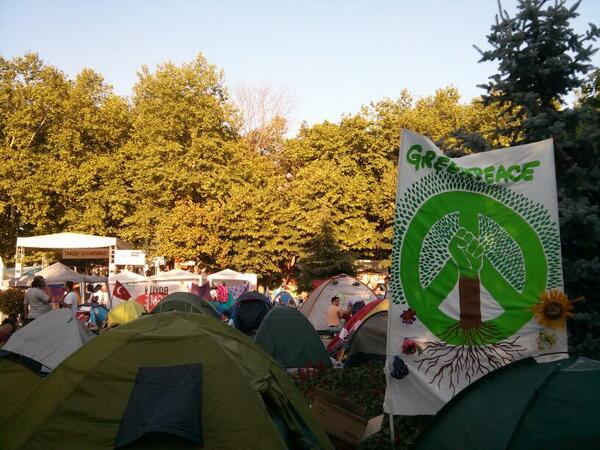
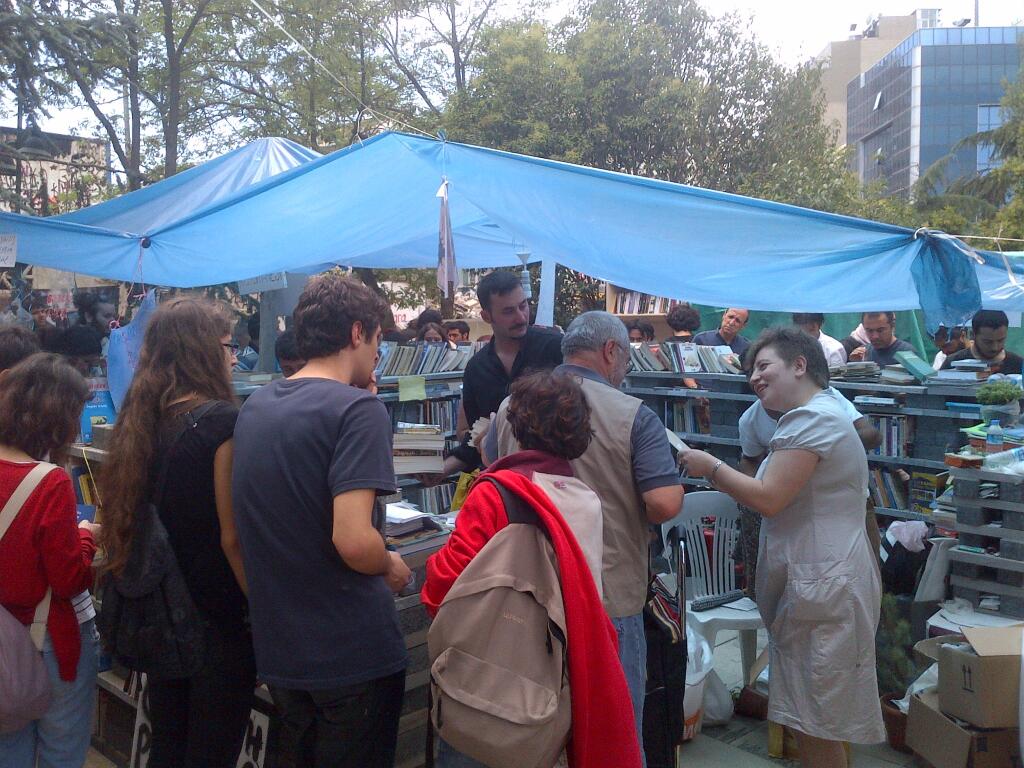
There are libraries (since destroyed by the police), food center, restrooms, theater, and lots of formal and informal activities within the park. It’s a lively, peaceful and colorful space. Here’s the library before:
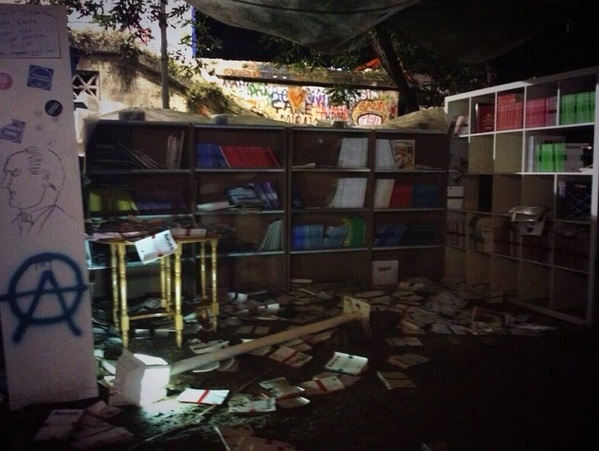
Well, here’s what the library looked like after the police entered the park on June 11th:
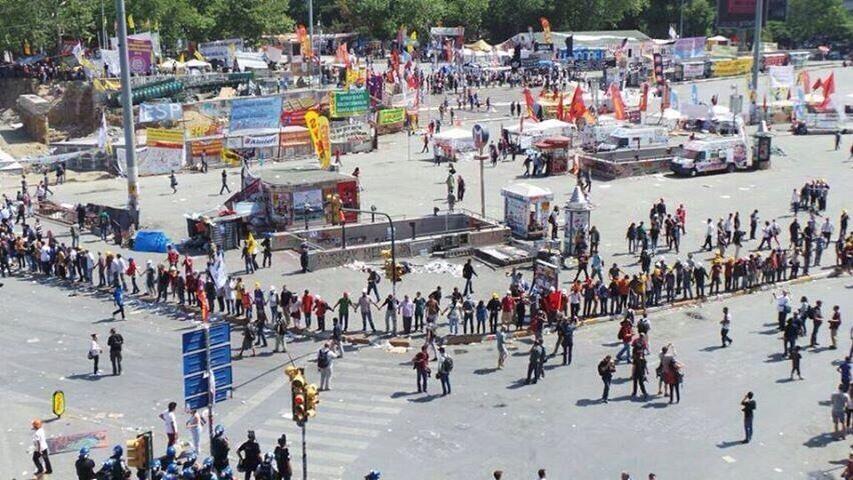
During yesterday’s clashes, there were indeed a few people who threw  ”Molotov cocktails” at the police in the square –which you may have seen on TV because that is the kind of visual that television stations like to put on a loop– but in my observations, the Gezi park protesters are very alien to that kind of behavior. In fact, during those very clashes they tried to form a human chain around the park and stop such violence from happening. They made calls via their megaphones for it to stop. I have walked most every inch of the park and spoke to a wide range of people. The protesters I spoke with expressed strong commitment to non-violence.

Here’s the human chain attempt to stop the clashes between police and the Molotov throwers (who were about six people) and to protect the park. The chain was dispersed with gas and water canons:
In fact, even the slightest scuffle is in the park calmed down immediately.  I observed this first-hand when a visiting youngster, about 14 or 15, tried to pick a fight with an older man claiming that he had looked at his girlfriend the wrong way. Dozens of people immediately intervened, calmed the youngster, took him away, helped his girlfriend, asked her if she was okay, and generally made sure it was all calm again. “Not here, no fighting, not here” is heard as soon as any tensions arise. People are very proactive. This is not a let-and-let-live space in those regards (though it is in many others).

There is also a campaign within the park, with many signs, asking people not to consume alcohol –yes, I know it’s ironic as government’s attempts to legislate lifestyle issues such as alcohol consumption are part of people’s grievances. However, people I talk to say that it’s very important that they keep the park clean, well-behaved, cooperative and non-violent. Signs everywhere say that “nothing is for sale in the park.” Food, masks, medical and other supplies, clothes, etc. are distributed free of charge. (There is also a burgeoning “street peddler” ring in the perimeter areas of the park, selling helmets, masks and, happily for me, fresh “simit”–Turkish sesame bagels.)

After talking to the park protesters for days here is a very quick compilation of the main complaints and reasons people say brought them to the park:

1- Protesters say that they are worried about Erdogan’s growing authoritarian style of governance. “He thinks we don’t count.” “He never listens to anyone else.” “Why are they trying to pass laws about how I live? What’s it to him?”

Erdogan’s AKP party won the last election (its third) and is admittedly popular with many sectors of society, including some who are now in the Park have voted for him. It has accomplished many good things for the country through a program of reform and development. Any comparisons with Mubarak and pre-Tahrir 2011 Egypt are misplaced and ignorant. The country is polarized; it is not ruled by an unelected autocrat who has alienated everyone.

However, due to the electoral system which punishes small parties (with a 10% barrier for entrance to the parliament) and a spectacularly incompetent opposition, AKP has almost two-thirds of the deputies in the parliament with about 50% of the vote. Due to this set up, they can pass almost any law they want. People said to me “he rules like he has 90%.”

So, that seems to be the heart of the issue. People have a variety of grievances, but concentrate mostly about overreach and “majoritarian authoritarianism.”

For example, Erdogan recently announced that they would be building a third bridge over the Bosphorus strait. Many people felt that the plan was not discussed at all with the public and concerns about environmental impact ignored. Then, he announced that they had decided the bridge would be named “Yavuz Sultan Selim”–an Ottoman king (“padisah”) famous for a massacre of Alevi (Turkey’s alawites) populations. Unsurprisingly, Alevis who compromise a significant portion of the Turkish population were gravely offended. In the predominantly “GAzi” (not Gezi) neighborhood, people have been marching every night since the Taksim protests began. Last night, they blocked the main TEM highway for a while before voluntarily dispersing.
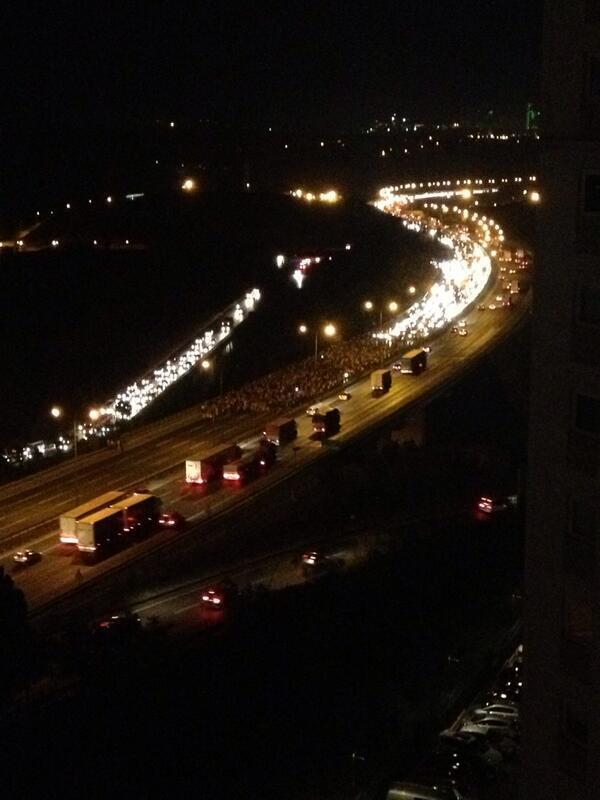
 

I asked someone from the Gazi neighborhood (GAzi neighborhood is not GEzi park.) why they were so angry and why there were protests there every night. “Wasn’t there anyone else in all of Turkey’s history to honor with the name of that bridge?” the person said. “Doesn’t he have a single Alevi friend to ask? Why can’t they ever ask someone about anything before announcing their decision?”

During the protests, Erdogan called the protesters “riff-raff” (capulcu) which has now been adopted by the protesters–they jokingly call themselves the riff-raff party. They are offended but also decided that they will call just respond with humor. Such dismissive language, undoubtedly, helps polarize the situation. “Why can’t he let us even have one little park?” was a common refrain among the people I interviewed. “Why must everything be his way?”

2- A very common and widespread complaint is about censorship in traditional. It is, indeed, much worse than I had thought. I had already blogged about how the CNN Turkey was showing penguin documentaries while the initial major clashes were ongoing, and while CNN International had a live feed to the clashes.
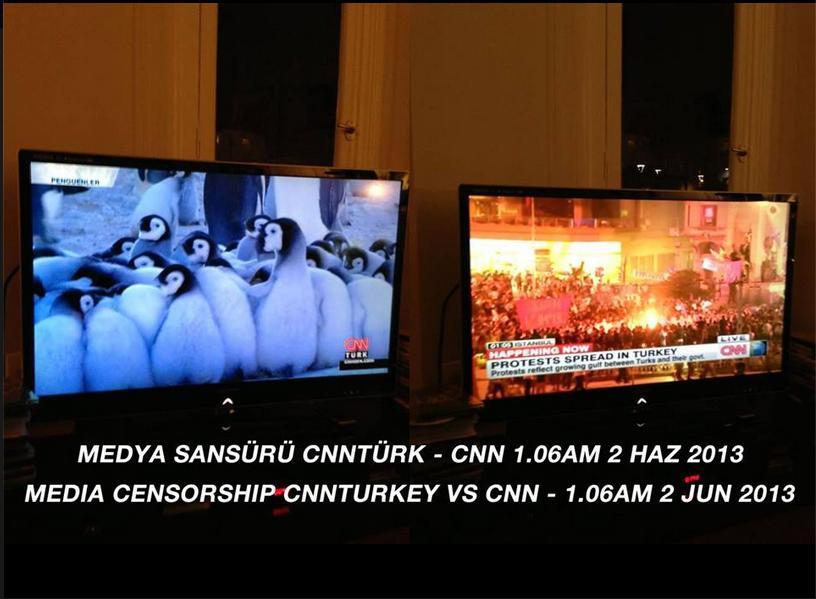
In the square, I chatted with journalists and people who told me they were journalists but joining the protests after their shift ended. They told me, some in tears, that they are not free. They said that the stories they file are shelved. One told me of being told “why don’t you rewrite this column” after writing a sharp critique of Erdogan’s stance during Arab Spring versus his stance now towards the protests.

I watched last night as the governor of Istanbul was “interviewed” on television on CNN Turkey (it’s not the worst or only awful one, but it’s notable.) There were ongoing clashes all day, in the middle of the biggest city in Turkey. The governor had said in the morning that the park would not be attacked. I was in the park all day and was tear gassed on and off all day–this was thoroughly documented. (I left when things got much worse and I couldn’t breathe, or obviously do interviews anymore. I’m there to interview, not to be tear gassed beyond rhyme or reason).

Instead of asking him tough questions, or even things that could be considered any kind of questions, the “interviewer” lobbed phrases that were so non-questions that “softball” would be a compliment. The “interview” ended with the “interviewer” asking the governor that perhaps they should end by having him repeat his call to parents. Oh, yes, the governor said. That’s a good note: “Parents should tell their children not to be in the park anymore. It’s not safe.” That is what passes for an interview.

Also, the few channels who were broadcasting the protests live were JUST hit by large fines by Turkey’s regulatory agency, RTÜK, for “inciting people to violence.” The level of control over the public sphere via media is worse that I had thought, and I was already worried. The journalists I spoke with said to me that it’s not just intimidation by government–many media publishers are also large conglomerates and want to keep good relations with the government for their business interests.

Unsurprisingly, social media, especially Twitter and Facebook have emerged as key protest and information conduits. Turkey also has no equivalent to “Al Jazeera” which played a major role during the Arab Spring. Most protesters I talked with said that this just wouldn’t be possible without especially Twitter and Facebook. Most people heard of what was going on in the park during the initial police attack (when the protest was small, the police moved in, burned the tents and started cutting down the trees) via Twitter and Facebook and showed up to try to protect the park. They couldn’t have heard it on mass media because it was broadcasting anything but the news. Penguins have become a mock symbol of the protest.

3- The police actions are a common cause of complaint among the protesters. The use of tear gas is quick and massive. This is not the first protest that has been subjected to massive tear gas. In fact, it seems to have become a modus operandi and main style of policing of demonstrations. Yesterday, while I was in the park, tear gas volleys regularly landed in the park. My interview recordings are interrupted by “gas breaks”: a bang, coughing. I watched people convulse and throw up from tear gas. I witnessed tear gas being thrown into the park when it was very crowded, creating a dangerous situation as people tried to run away and risked trampling. The park is experienced, though. As people panicked, lots of seemingly experienced protesters, started yelling for people to calm down, opening exits, helping people.


One of the key demands of the protests is freedom as assembly and freedom from this kind of police intervention.

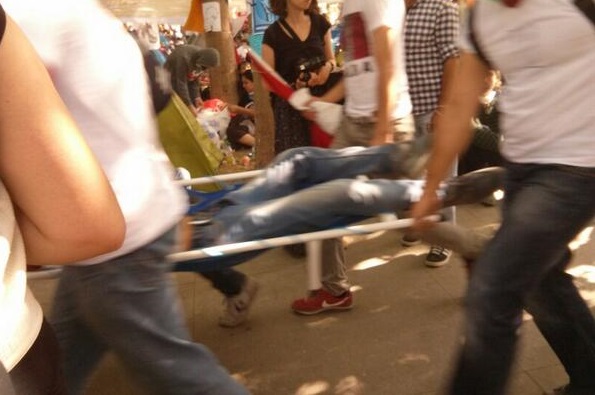
Also, protesters were hit with tear gas canister–what had also happened in Egypt and killed many people. I personally saw a young man bleeding from the head on a stretcher being rushed to the “field hospital” area–which also got attacked with tear gas later. After him, another man came sobbing through the area. “They are aiming the canisters at our head. Aren’t they human? Aren’t we human?” he sobbed.

Here’s a picture I took of person in stretcher–he was bleeding from his head, not captured in the photo:
Here are some pictures during the day when the tear gas was lobbed inside the park. I don’t have a picture for some of the worst clashes when the park was basically engulfed in massive amounts of gas partly because it was a difficult situation and also partly because some of the worst happened after I left. These pictures are from June 11th, when the governor said the park would not be attacked.

I did not take this picture but it shows you how it can get:
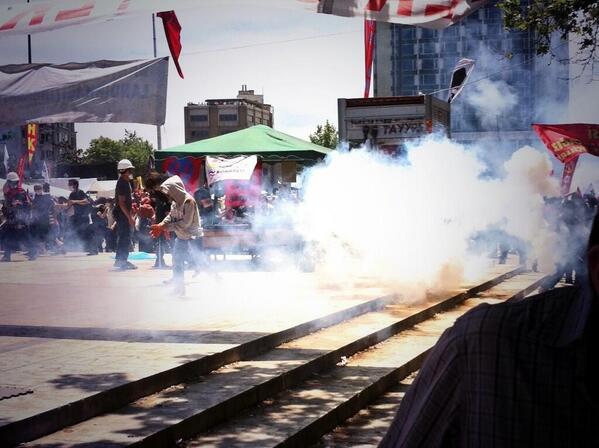
This one I took–one of the many tear gas volleys fired into the park while I was there on June 11th.
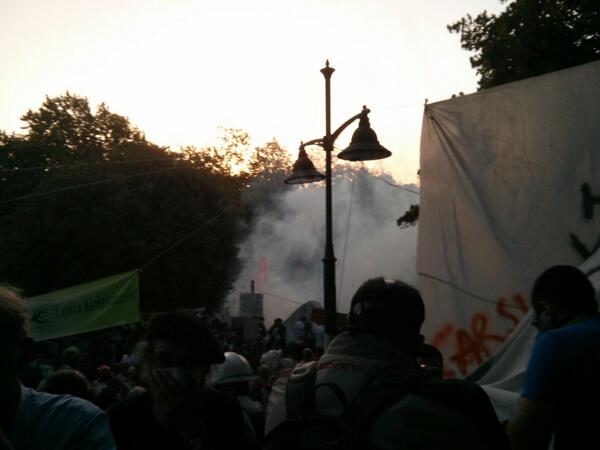
I personally think tear gas should be regulated internationally and be used only in truly and rarely dangerous situations. We need an arms control treaty on tear gas. Not only is it not non-lethal, it has become a way to deny freedom of assembly. I understand that there are some situations that the police do need to use non-lethal force. The situation, however, seems out of hand–instead of a high bar for use of this substance, it has become something that is just lobbed.

I know that now I am going to be criticized heavily by some people in Turkey. Let me end with some clarifications. I have friends who are and remain strong AKP supporters and they, too, are mostly aghast at what has been happening. I’ve always tried to explain that the government has popular support and remains popular; however in a polarized country.

Rumors of Internet shut-down are false. In fact, throughout the protests, I have been able to tweet, with pictures, from the park (some mobile operators brought extra repeater trucks to the area). I lost Internet only once–during the worst clashes– and I later learned that one of the repeater trucks was on fire, likely contributing to the problem as well as tens of thousands of people desperately trying to call out. However, I witnessed the ridiculous levels of media censorship first hand and I heard some stories directly from journalists.

Some people asked my why I don’t go interview AKP supporters and their use of social media? In fact, I’d be happy to, at some point. I study social movements and social media so it is natural for me to interview protesters. The notion that AKP supporters do not use social media is false. The idea that AKP is just behind the times with such technologies is also false. The prime minister did indeed call Twitter a menace (or curse) to society, but all his top lieutenants are on social media and very active. So are, as far as I can tell, large portions of AKP’s own public. AKP is a tech-savvy party full of competent people. There is simply no comparison to Mubarak’s inept misunderstanding of the new media ecology.

And that’s it for now. I am now going to go back to the battered, tired Gezi Park and continue doing interviews for as long as I can. I shouldn’t have to interview with a helmet, though, in fear of tear gas canister landing on my head. The governor keeps promising that the park won’t be attacked. Here’s me interviewing yesterday in the park, and here’s hoping to less tear gas.


"Come, Come, Whoever You Are.” As a Pluralist Movement Emerges from Gezi Park in Turkey

After the Gezi Park occupation was dispersed, dozens of neighborhood forums popped up around Istanbul where people get together to discuss a variety of issues. I’ve been attending these neighborhood forums, which are are organized in an “agora” format where speakers line up and take turns to speak. While media attention remains on the  frequent Taksim Square demonstrations, the forums are lively, continue to be well-attended and are breaking precedent in Turkish politics which started with Gezi. To give a sense of the space, here’s the Abbasaga forum in Besiktas (at 12:30a on a Friday).
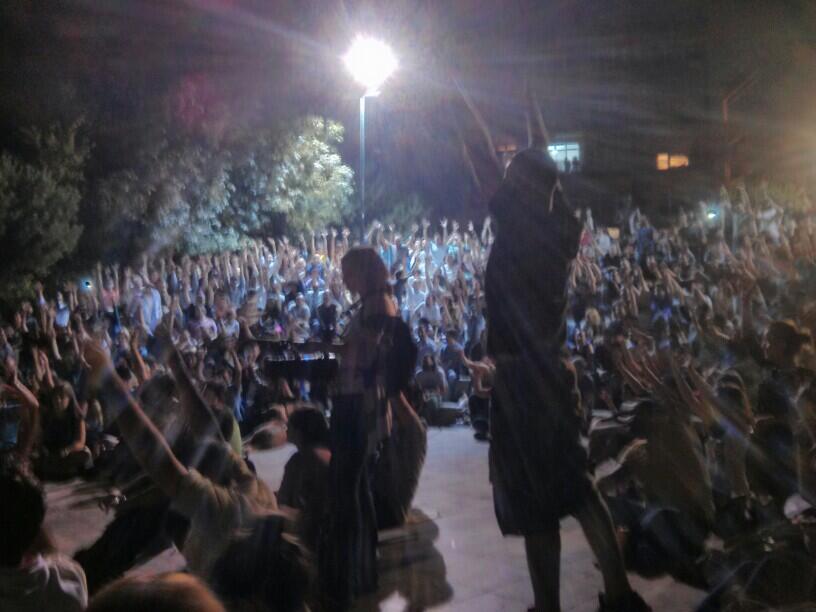
In Gezi, one thing that struck me and that I’ve been tweeting about, and that came up in many of the 100+ interviews I conducted with the participants was the spirit of tolerance and diversity. Gezi protests participation included people ranging from nationalist/traditional Kemalists to Kurdish political parties, from the  ”internet generation” youth (as they are referred to here) to feminists, from “revolutionary muslims” to many ordinary citizens who do not fit into any of these categories.

(By the way, the media, both here and abroad are missing the story–during the Gezi occupation, they concentrated on the occasional clashes in Taksim square. Now, during the neighborhood forum process, they still only cover Taksim protests. While important, that is not where the heart of the story is).

Many people I interviewed in Gezi told me that, for the first time, they found themselves talking with people with whom they had rarely interacted, with whom they had harbored prejudices, and with whom they had never had this kind of deep, political and substantive conversations. It emerged as the most personally satisfying aspect of the Gezi Park experience for many participants.

This unity was helped along by the police repression as well as  Erdogan’s totalizing, polarizing rhetoric in which protesters were alternatively referred to as marginals, looters (“çapulcu” which became the term they adopted for themselves), terrorists, etc. Being stereotyped in so many negative ways helped create this identity of one of unity and tolerance within difference.

A famous photo from the Gezi Park period illustrates has become a symbol of this Post-Gezi politics in Turkey.

Running from the police in this picture are  two youths, holding hands, one carrying  a flag from the Kurdish BDP party and another an Ataturk (Kemalist) flag (ideologies that almost never speak to each other, or at least kindly). At the corner, another man makes the “wolf” sign that is traditional to ultra-nationalist Turks.
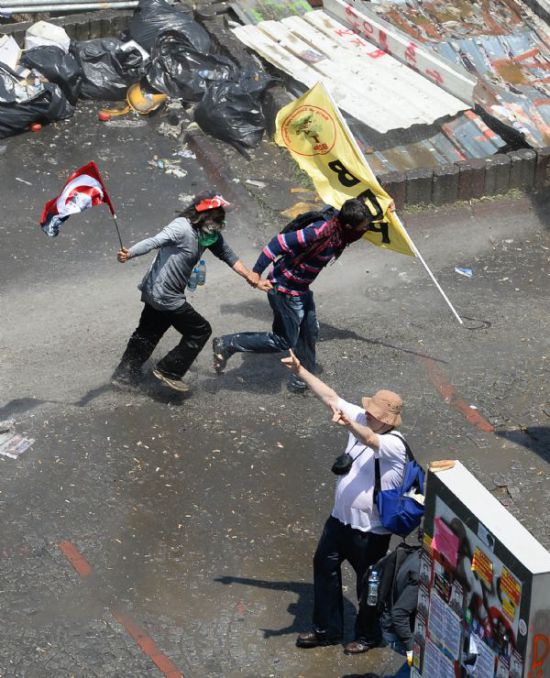
 

To be honest, had I not seen, interviewed in, and experienced Gezi myself, I’d be trying hard to figure out if this was photoshop. One can’t help by feel incredulous by such scenes in Turkey.

It is, however, a true picture–a pluralist generation has sprung up in Turkey under AKP’s strong rule partly because of it, and partly as a reaction to it. And that, mostly, is at the heart of the political crises that is fueling Gezi. This pluralism has no political expression and no real reflection in mainstream media, which is a little more than a government parrot these days, or even “opposition” traditional media which remains relatively firmly encamped in totalizing or outdated ideologies.

(A “dissident” TV station I watched last night –”Halk TV”– was trying to sell a “support package” which included pictures of Ataturk, stickers of Ataturk, flags of Ataturk, a book of Ataturk, a t-shirt with Ataturk’s saying and a poster of Ataturk–hardly an advanced political message in 2013 for a complex, diverse, modern county like Turkey. Such dissent, little more than repeated waving of many pictures of Ataturk, is not attractive especially to the youth, including secular youth, I spoke with in Gezi Park.)

In sum, in Turkey, there is no political party or institutional infrastructure which reflects this generation or this emerging pluralism. In fact, people often call this “Gezi ruhu” or “spirit of Gezi” to try to find a name for this unprecedented political coalescence.

I have come to think of this moment as an anti-postmodern pluralism. Unlike early stage (or, well, “traditional”) postmodern approaches, the “other” is not configured as an opaque, unknowable, “outside” entity. There is multitude but there is also unity and a unifying grand narrative–a unity that is based on empathy rather than a single model of the desirable. The “other” is knowable through common human experience and suffering.  Hence, this is not like post-modernity which rejects unity or gran-narratives. In fact, it is striking how strong the grand, unifying narrative is among many participants.

In this non-post-modern pluralistic sensibility, there is an emphasis on shared stories but these stories are constructed not through erasing difference but through emphasizing empathy, tolerance and shared respect. Unlike traditional modernity which attempts to create one type of individual (a political ideology that characterizes both pre-AKP Turkey and, increasingly, post-AKP Turkey even though the “one type” being attempted has shifted significantly), difference is not fetishized, it is acknowledged as the basis of tolerance. “I’m against homophobia and islamophobia”, a young forum participant said, not seeing any contradictions in his stance: “I want the headscarf to be free and I want gay people to be free.”

As such, pluralism and tolerance are perhaps the most significant political values emerging in the post-Gezi politics.

For example, after a shooting in Kurdish Lice over tensions about building of new military posts, people in forums in Besiktas and Kadikoy, nationalist strong-holds, marched in support of Kurdish grievances. This would have been hard to imagine a month ago.

I have seen feminists conduct workshops in Gezi –specifically targeted to to soccer fans– on why they should not use misogynistic insults.

Muslim groups in Gezi distributed “kandil simit” –traditional for Prophet’s birthday– in Gezi and held prayers on that Islamic holy day.

I’ve seen Muslim groups praying in Gezi while a woman with crewcut, punk haircut –clearly not part of “them”– shood away journalists trying to take pics, who she thought was not respectful to their prayer. “They are praying, not putting on a show for you” she exclaimed and made the journalists keep their distance.

Perhaps the most interesting configuration to have emerged from the Gezi protests has been the LGBT community in Turkey. Long oppressed, it is also a community that has long struggled openly. Unlike other countries in Middle East, Turkey has a strong and burgeoning LGBT community that is increasingly coming out of the closet and organizing.  Like other countries in the Middle East, they face grave prejudice and oppression.

LGBT neighborhoods (Turkey’s “Castro”) in Istanbul are concentrated around Taksim and Gezi Park is, so to speak, in their backyard. They were among the first protesters to try to protect the park and they have been central to its defense and organizing from the beginning. Along the way, they have acquired respect and status among many people who participated in the Gezi process.

Another key player in the Gezi protests  has been “Carsi” –Turkey’s ultras who are fans of Besiktas soccer team. Carsi is known for their rowdy marches, bravery, somewhat unusual ingenuity which at one point involved hotwiring a back-hoe to push back against police APCs, and, unsurprisingly, their machismo.

Hence, some examples from the interaction between Carsi and LGBT organizations, two big players in Gezi Park resistance, illustrates  the fascinating interaction emerging in this process.  A favorite slogan for soccer fans in Turkey is “ibne hakem” or “the referee is a fag.”

Predictably, soccer fans adopted this slogan to politics in Gezi and started referring to various AKP officials as such. Predictably, the LGBT folk were not happy. They approach the soccer fans, Carsi, and asked them not to refer to AKP politicians –or others– as “ibne.” “We are the fags and real fags are here defending Gezi Park” they explained to the bewildered Carsi supporters who probably had rarely seen anyone proclaim the identity as a source of pride. However, Carsi had also seen the LGBT folk brave police repression–which the LGBT people explained is part of everyday life for them. Soccer fans, too, had often experienced clashes with the police.  An understanding was not impossible.

After some back and forth, Carsi soccer fans countered that they might drop “fag” but they needed good insults. “How about sexist Erdogan?” was a suggestion from the LGBT contingent. So, this all ended with Turkey’s ultra-macho soccer fans chanting “Sexist Erdogan.”

In another instance in Gezi Park, I witnessed a Kurdish “teyze” (an older, traditional woman) from southeast Turkey in a heated, compassionate conversation with one of Istanbul’s better known transgendered activists. The dialogue, which I witnessed, was mostly about the need to love and understand each other’s suffering. During this conversation, the Kurdish “teyze” spoke in a thick, Zaza (a dialect of Kurdish) accent while the transgendered activist hugged the rainbow flag he had been waving and used speech locutions that are very specific to the gay community in Turkey. It ended up with them hugging in tears, vowing to keep in touch.

It also ended with me having to sit down to catch my breath that I had just witnessed what I had just witnessed.

I’m not sure I’d have believed all this was possible a month ago. Clearly, though, it was in the making–it did not come out of nowhere.  Rather, AKP’s strong hand in governing has created constituencies for whom plurality and tolerance is a key value. As one Gezi participant said to me: “my problem is that this man [Erdogan] wants to paint us all black. We are a rainbow! There are many colors!” Hence, this tolerance was not just a momentary convenience, but a value that has emerged from an experience of feeling and being shut out.

It’s unclear how much this pluralism will carry on in the future–or how widespread it is in the country in general–but it is a striking and a potentially deeply transformative experience for the participants in the Gezi process as well as the ongoing neighborhood forums.

So, I come to today. In a few hours, the 11th LGBT pride march will start in Taksim. It is the first march with a “permit” in Taksim since the beginning of Gezi protests (though nobody really seems to be taking permits that seriously these days). Many groups, well, pretty much everyone, who has been a part of the Gezi protests will be attending. Most neighborhood forums I attended have expressed a desire to march as well.

This might be the first time that Turkey’s LGBT community leads –and is not just tolerated– a large and diverse march of dissenters whose unifying ideology is emerging as tolerance and plurality.

Today, in Turkish twitter, “#direnayol” is trending which brings together Gezi politics with LGBT symbolism.

In Turkish, “diren” means to resist and has become the symbolic word of the Gezi protests–”#direnankara” to refer to protests in Ankara, for example. When AKP youth floated a badly photoshopped image suggesting that the famous pepper-sprayed “women in red” was was an actress and the whole thing was a set up (there is ample video and multiple Reuters photos of the pepper-spraying incident), twitter users started joking with #direnphotoshop–resist, photoshop.”

“Ayol” on the other hand, is the Turkish linguistic equivalent of a “limped wrist.” It literally connotes a sense like “darling.” So, to say “gel, ayol” is a bit like saying “come, darling.”  In Turkish “ayol” is also a symbol of gay speech, a locution that can be added to  sentences to convey a queer sensibility. For example, “Ayol, it’s an actual revolution” (“ayol, resmen devrim”) had become a slogan of the LGBT community during the Gezi events.

During the Gezi Park Protest, a whirling dervish in a gas mask visited Gezi park (of course, right?) and the image was widely circulated, often along with the saying “Sen de Gel” — a saying meaning, “you, too, come”, from a sufi poem by Rumi.
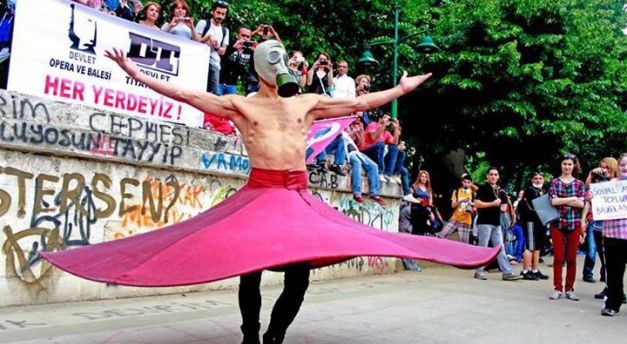
 

Today, along with the #direnayol hashtag, the following image has been circulating in Turkish Twitter, uniting the LGBT rainbow flag (a very recognizable symbol in Turkey), the dervish, the gas mask, and the call: “You, too, Come.”:

The Rumi poem “Sen de Gel” is inscribed in his shrine in Konya, Turkey and was perhaps best translated in spirit by Coleman Barks:

Come, come, whoever you are,
Wanderer, worshiper, lover of leaving.
It doesn’t matter.
Ours is not a caravan of despair.
Come, even if you have broken your vows
a thousand times.
Come, yet again, come, come.

So, perhaps, I’ll end by answering a question many friends of mine have asking me–should I come to Turkey during these turbulent times? I’ll repeat the answer I’ve been giving all along. Yes. I’ve even joked that the unsafest part of my visit to Turkey was the ride from the airport in a taxi that had removed the seatbelt–and I mean it. Istanbul is a big city and usual big city precautions apply–and Taksim at the height of a protest is not advisable if you have children with you.

Erdoğan Is Gone, Way Gone

Turkish Prime Minister Recep Tayyip Erdoğan addresses his supporters and lawmakers at the parliament in Ankara, Turkey, Tuesday, June 25, 2013.

Three weeks ago, Prime Minister Recep Tayyip Erdoğan was set to enter the history books as Turkey’s most successful politician since the Republic’s founding father, Mustafa Kemal Atatürk. But bad mismanagement of a fortnight of urban protest has irreparably damaged Prime Minister Erdoğan’s political legacy and his party.

What began as a modest demonstration of concerned environmentalists in Istanbul’s city center has evolved into a much broader protest, reflecting accumulated anger over increasingly restrictive government policies and disproportionate police action, which has resulted in four deaths and 7,500 injuries. One of the United States’s closest allies has just failed a major leadership test.

The prime minister and his allies made three political mistakes. First, Prime Minister Erdoğan refused to accept that protest as a legitimate and necessary part of an open society, instead missing out on an opportunity to deepen Turkey’s democratic exchange. Second, the Justice and Development Party, or AKP, underestimated concerns of the middle class about restrictions on freedom of expression, new alcohol regulations, the prime minister’s increasingly despotic leadership style, and the outsize role of the state in average Turks’ lives. Third, the prime minister’s aggressive rhetoric was laden with thinly veiled conspiracy theories and threats. He repeatedly distinguished between the “real Turkey,” consisting of his supporters and the “extremists” that he and his cabinet characterized as terrorists. All of this served to deepen existing divisions within Turkish society.

Prime Minister Erdoğan’s uncompromising streak was well known before the protests, but the extent of his miscalculation was a surprise. The prime minster left for Africa in the early hours of the protest, accepting an honorary doctorate in Algeria while Istanbul was shrouded in tear gas. Even sympathetic observers agree that he and his party are becoming victims of hubris after a decade in power and several resounding electoral victories.

The use of police violence in response to political protest—observed firsthand by CAP’s Matthew Duss during a recent trip to Istanbul—served as a stark reminder of Turkey’s deep internal political divisions. The prime minister wasted good opportunities to de-escalate the conflict, and despite some conciliatory remarks, none of the more moderate AKP leaders dared to challenge him. One renowned Turkish commentator argued that “the government and its hard core supporters are proving that they do not have the mental capacity to understand what is really happening.”

Maybe it’s time for the AKP leadership to learn Portuguese and follow Brazil’s lead.

When similar protests erupted in several Brazilian cities last week, driven by middle-class demands for more reliable transportation and better governance, police responded with a harsh crackdown resembling the one that occurred in Taksim Square. But Brazil’s political leaders reacted very differently. President Dilma Rousseff struck a conciliatory tone, stating she was “listening to the voices calling for change” and admitting that “Brazil has woken up a stronger country” after the protests. She called off a diplomatic trip to Japan and announced an emergency cabinet meeting to discuss the unrest. President Rousseff also acknowledged legitimate grievances and the right to protest, while opening a dialogue with protesters, thereby defusing the situation—in stark contrast to Prime Minister Erdoğan’s response.

These disparate reactions show the importance of inclusion and responsiveness in the mass politics in today’s rising democracies. Brazil and Turkey have roughly the same per-capita income, both shook off military rule in the 1980s, both are important strategic partners to the United States, and both have experienced rapid economic expansion over the past decade, lifting 40 million Brazilians out of poverty and growing Turkey’s gross domestic product by more than 40 percent. But Brazil’s politics has been shaped by a policy of social inclusion and free expression. At virtually every level, officials have echoed the message of President Rousseff, who conceded that it was “befitting of youth to protest.” This explosion of popular anger caught both governments by surprise, but the reaction of Brazil’s political leaders was pragmatic, smart, and open-minded.

In Turkey, on the other hand, the AKP leadership showed no such confidence in the population and reacted with outlandish conspiracy theories, paranoia, and threats against its own citizens. The foreign minister accused certain “circles” of trying to damage Turkey’s image, questioning journalists’ motives for reporting on the protests. Prime Minister Erdoğan lashed out at CNN, Reuters, and the BBC for what he called “fabricated news,” and reacted angrily to criticism from the European Parliament, saying that “there is a price for talking so freely and boldly about Turkey’s domestic affairs.”

Later, the Turkish Radio and Television Supreme Council fined a number of channels for “harming the physical, moral and mental development of children and young people” by covering the protests. Given Turkey’s recent history ofcurbing freedom of expression, the AKP’s response to the protests has created an atmosphere of division and intimidation. Again in sharp contrast to Turkey, freedom of speech is enforced by law in Brazil, and censorship is widely condemned by politicians and civil society alike. In spite of several unsolved violent crimes against journalists, President Rousseff has made an effort since taking office to reaffirm constitutional protections for the freedom of information.

The Turkish government’s conspiracy theories also demonstrate its tendency to stifle dissent and project domestic political paranoia abroad. Foreign Minister Ahmet Davutoğlu demanded that Turkish embassies abroad report “which efforts these countries took to create a perception against Turkey.” Dissent is condemned as an attack against Turkey itself and dismissed as the result of foreign meddling. Interior Minister Muammer Güler also revealed the AKP’s inability to grapple with dissenting opinion when he asserted that social-media users had “passed on false information to provoke the demonstrations,” adding that those “who manipulate public opinion and guide demonstrations on Twitter and Facebook will be revealed.” Social media has become the new enemy of the state.

The tradition of blaming the “other” has risen to new heights in Turkey. After returning from his trip to Africa, the prime minister accused financial investors of encouraging the protests. Prime Minister Erdoğan said that an “interest-rate lobby” is “threatening Turkey with speculation,” adding that this group “has exploited the sweat of my people for years.” These barely disguised anti-Semitic themes have a long history in populist politics; even moderate elements of the Turkish cabinet joined in. Finance Minister Mehmet Şimşek was quoted as saying “there are factions that are trying to benefit from countries’ situations like this,” while U.S.-educated Deputy Prime Minister Ali Babacan added that “the interest-rate lobby knows who they are.” Some analysts have dismissed these statements as a nuisance, but rhetoric matters. The “interest-lobby” debate and distinctions between predatory and producer capitalism were core features of 20th century right-wing propaganda against so-called “Jewish finance capitalism.”

The Turkish leadership has lost its political and moral compass over the past three weeks. Demonstrations that at first represented a moderate challenge to AKP policies have exposed a paranoid streak. The prime minister and his party have failed this leadership test, even if the AKP shores up its near-term political situation. According to columnist Semih Idiz, “none of [Prime Minister] Erdoğan’s sensible advisers—and there must be some—have the courage to tell him that this negative image of Turkey is not part of an international conspiracy but is of the government’s own making for mismanaging what started off as a simple protest to protect trees.”

The AKP leadership fails to see that a pluralist democracy is the only viable option for Turkish society. This failure of leadership will change the course of political confrontations in Turkey and affect Turkey’s role in the Western alliance: Europe has delayed negotiations on Turkish accession into the European Union. And, just weeks after receiving Prime Minister Erdoğan in Washington, President Barack Obama and Secretary of State John Kerry must be wondering if it is time to review the U.S. relationship with Turkey as well.

Cloud Computing Meets HIPAA Omnibus Rule

This provider checklist will get you on board with your looming compliance deadline

Negotiation with Chinese: Practical Guide for Western Managers

Even so Chinese businessmen are more aware of international rules and etiquette, in recent years, the cultural differences will still remain as a major barrier to successful business with Chinese during the next century at least. Many managers believe no specific attention is needed for doing business, and actually the capability to understand and manage cultural relationship is defined by the Cultural Intelligence (CQ – which is a fairly new concept defined by C. Earley in Harvard Business Review Oct.2004 (http://hbr.org/2004/10/cultural-intelligence). The lack of cultural awareness has been the root cause of many failures in China and is often attributed to unfair business but rarely to behavioral differences. We expect below to give some basic principle of negotiations with Chinese that would greatly help getting successful deals oversea.

Preparation:

  •  Date: Avoid main Chinese holidays like national day, autumn festival and Chinese New Year. -
  • Language: Learn some basic Chinese, always very appreciated, few examples: Nihao (means hello, pronounced “nee haow”), Xiexie (means thanks, pronounced “she-yeh she-yeh”),… Google Translate gives good pronunciations for learning purpose. -
  • Topic: Read recent positive news from China (achievements, sports, industrial development): this is very valuable during dinner to show that you know about China, and gives your Chinese partners a sense of proud and happy. It is better to avoid controversy topics, don’t speak about national politics with Chinese, and especially China’s own problems like pollution or corruption.
  • Energy: Be prepared for long meeting, especially for difficult and complex subjects, better to start the meeting well rested without too much jetlag.

Meeting:

  • Schedule: Be punctual to meeting, if late, inform your contact as soon as possible. -
  • Agenda: As always, it is better to prepare and propose the meeting agenda well in advance, avoiding surprises and increasing meeting efficiency. – Gift: Always positive to prepare gifts. At minimal, one for the host, alcohol or chocolate is a good pick. Gift values should be similar in price than they are offering (reciprocity concept). The gifts shall be wrapped in red or gold paper preferably and black, white shall be avoided. -
  • Naming: When calling your Chinese contacts: Mr./Ms. + last name or Last name + first name, if they have an English name, it is normally enough by itself, no need for the last name. -
  • Business card exchange: During the first contact, hold with 2 hands, take time to read the title while holding it, importance is a bit over exaggerated, but still better to do. Try to give more attention on the highest ranked host, title is very important in China. Last, it is not recommended to write, even the date, on the business card, better to do it after the meeting.
  • Meeting room: Sit preferably in front of the door when you are the visitor. Historically reason was coming from old tradition with assassin coming from the door to kill visitors. Being in front, you see them coming. The host normally sit at the middle of the table.
  • Giving face: Ensuring that you are never personal on negative matters, consider yourself and your Chinese counterpart as part of a corporation/team with shared responsibility for any decisions and actions. Bringing a problem personal will never improve the negotiation in China. If you come in team, it is preferred the meeting is leaded by your highest executive. It shows respect to your counterpart.
  • Eye fixing: Looking straight in the eyes might be regarding as impolite and lack of respect. Eye contact is still important thus, but not fixing. -
  • Yes or No: Asian are famous for never saying no. This is actually not that straight. A “No” can be seen as a failure and a face issue. As such they tend to express their refusal in a different way, try to observe the body language and the words used. A “it’s ok” for example is meaning a partial acceptance and it is better to discuss further the case. In many situations, reformulating your questions with different words is a great way to confirm the answer. -
  • Conversation: Unlike Latin habits, do not interrupt Chinese until they stop talking. Be patient and never show anger
  • Negotiation: Chinese are tough negotiators varying the style to get results. Be prepare to some concessions, it will give face to the negotiator and help getting the deal.

Dinner:

  • Dining and drinking is a very important part of the process of negotiation. Accepting lunch or dinner proposal is a must and part of the business process, a refusal can be misinterpreted. There is a saying in China that “business is done on dining tables”. It is better to plan in advance and to accept the invitation. If needed, initiate dining invitation by yourself. – Always accept the proposed food (should happen even more for things you don’t want to eat). There is a trick that you can still leave what you don’t like inside the plate. – Don’t eat on the provided plate (like westerners do), put food in the bowl and use the chopsticks in the bowl. The plate is used for rubbish. – Don’t stick the chopsticks in the rice, or fruits, even to put it in the mouth, this is equivalent to death symbol. If you cannot use chopsticks, most restaurants can provide knife and fork.
  • Ganbei: Somehow equivalent to cheer, it means drinking alcohol bottom-up for toast. Nowadays, the liquor is often replaced by wine or beer, still bottom-up, be prepared. Chinese believe that “friendship is built by drinking together”, and will find many reasons to Ganbei with you, from cooperation to friendship and partnership. The main purpose is to emphasis positive aspects of the business and your active participation find topics to cheer will be highly appreciated. – Don’t be surprised by Chinese managers asking for your salary or cheering for money. Money is a popular subject like health in Europe. – Don’t discuss about business at dinner unless your Chinese counter-part is asking for. Dinner is a place to build relationship; any other topics can be addressed, especially about the Chinese boss’ achievements and success. Again politic shall be avoided unless you get close relationship.

Of course, there are many more specific manners, please check here for more details:http://en.wikipedia.org/wiki/Customs_and_etiquette_in_Chinese_diningOverall, the dinner place is beneficial to build business relationship and this is a very important concept. It will increase the trust level as well as the deal success rate from the meeting. Those tips has for purpose to prepare you to go to China and doesn’t include all, the key is awarenessmodesty andrespects: – Awareness of the differences, reading signs like body languages, change of tone… – Modesty, no need to try to impress your counterpart, inferiority feeling will not have positive effect. – Respect: consider your counterpart as your equivalent and adapt to their traditions.

Tuesday, June 18, 2013

Top 10 most unhealthy, cancer-causing foods that we should never eat these again

ByJonathan Benson

The statement “everything causes cancer” has become a popular hyperbole, and one that some people use as rhetorical fodder to excuse their own dietary and lifestyle failures, particularly as they pertain to cancer risk. But the truth of the matter is that many common food items have, indeed, been scientifically shown to increase cancer risk, and some of them substantially. Here are 10 of the most unhealthy, cancer-causing foods that you should never eat again:

1) Genetically-modified organisms (GMOs). It goes without saying that GMOs have no legitimate place in any cancer-free diet, especially now that both GMOs and the chemicals used to grow them have been shown to cause rapid tumor growth. But GMOs are everywhere, including in most food derivatives made from conventional corn, soybeans, and canola. However, you can avoid them by sticking with certified organic, certified non-GMO verified, and locally-grown foods that are produced naturally without biotechnology (http://www.naturalnews.com).

2) Processed meats. Most processed meat products, including lunch meats, bacon, sausage, and hot dogs, contain chemical preservatives that make them appear fresh and appealing, but that can also cause cancer. Both sodium nitrite and sodium nitrate have been linked to significantly increasing the risk of colon and other forms of cancer, so be sure to choose only uncured meat products made without nitrates, and preferably from grass-fed sources (http://www.organicconsumers.org/foodsafety/processedmeat050305.cfm).

3) Microwave popcorn. They might be convenient, but those bags of microwave popcorn are lined with chemicals that are linked to causing not only infertility but also liver, testicular, and pancreatic cancers. The U.S. Environmental Protection Agency (EPA) recognizes the perfluorooctanoic acid (PFOA) in microwave popcorn bag linings as “likely” carcinogenic, and several independent studies have linked the chemical to causing tumors. Similarly, the diacetyl chemical used in the popcorn itself is linked to causing both lung damage and cancer (http://www.drweil.com/drw/u/QAA400701/Microwave-Popcorn-Threat.html).

4) Soda pop. Like processed meats, soda pop has been shown to cause cancer as well. Loaded with sugar, food chemicals, and colorings, soda pop acidifies the body and literally feeds cancer cells. Common soda pop chemicals like caramel color and its derivative 4-methylimidazole (4-MI) have also specifically been linked to causing cancer (http://www.naturalnews.com/031383_caramel_coloring_cola.html)

5) ‘Diet’ foods, beverages. Even worse than conventional sugar-sweetened soda pop, though, is “diet” soda pop and various other diet beverages and foods. A recent scientific review issued by the European Food Safety Authority (EFSA) of more than 20 separate research studies found that aspartame, one of the most common artificial sweeteners, causes a range of illnesses including birth defects and cancer. Sucralose (Splenda), saccharin and various other artificial sweeteners have also been linked to causing cancer (http://www.dailymail.co.uk).

6) Refined ‘white’ flours. Refined flour is a common ingredient in processed foods, but its excess carbohydrate content is a serious cause for concern. A study published in the journalCancer Epidemiology, Mile Markers, and Prevention found that regular consumption of refined carbohydrates was linked to a 220 percent increase in breast cancer among women. High-glycemic foods in general have also been shown to rapidly raise blood sugar levels in the body, which directly feeds cancer cell growth and spread (http://www.naturalnews.com/001812_cancer_prevention.html).

7) Refined sugars. The same goes for refined sugars, which tend to rapidly spike insulin levels and feed the growth of cancer cells. Fructose-rich sweeteners like high-fructose corn syrup (HFCS) are particularly offensive, as cancer cells have been shown to quickly and easily metabolize them in order to proliferate. And since cookies, cakes, pies, sodas, juices, sauces, cereals, and many other popular, mostly processed, food items are loaded with HFCS and other refined sugars, this helps explain why cancer rates are on the rise these days (http://www.naturalnews.com/038071_cancer_sugar_sweets.html).

8) Conventional apples, grapes, and other ‘dirty’ fruits. Many people think they are eating healthy when they buy apples, grapes, or strawberries from the store. But unless these fruits are organic or verified to be pesticide-free, they could be a major cancer risk. The Environmental Working Group (EWG) found that up to 98 percent of all conventional produce, and particularly the type found on its “dirty” fruits list, is contaminated with cancer-causing pesticides (http://www.ewg.org/foodnews/list/).

9) Farmed salmon. Farmed salmon is another high-risk cancer food, according to Dr. David Carpenter, Director of the Institute for Health and the Environment at the University of Albany. According to his assessment, farmed salmon not only lacks vitamin D, but it is often contaminated with carcinogenic chemicals, PCBs (polychlorinated biphenyls), flame retardants, pesticides, and antibiotics (http://www.albany.edu/ihe/salmonstudy/pressrelease.html).

10) Hydrogenated oils. They are commonly used to preserve processed foods and keep them shelf-stable. But hydrogenated oils alter the structure and flexibility of cell membranes throughout the body, which can lead to a host of debilitating diseases such as cancer. Some manufacturers are phasing out the use of hydrogenated oils and replacing them with palm oil and other safer alternatives, but trans fats are still widely used in processed foods (http://

www.naturalnews.com/010095_hydrogenated_oils_unhealthy.html).

unhealthy foods

Saturday, June 01, 2013

Matter of Perspective

It is shameful for being so callous and liberal with excessive force in residential areas towards civilians. Especially when it all started as a  peaceful movement that has taken off in Istanbul to oppose its demolition as part of a redevelopment plan. A group of protestors have been under attack of police officers since Friday, May 31th with water cannons and tear gas in Istanbul. Occupy Taksim Gezi Park is a movement that is beyond protecting green recreational parks of Turkey. It is held not only in Istanbul but also in major cities (Ankara, Izmir, Bursa etc.). As the younger generation, it's your duty to be aware of these events through social media channels while the protestors who are injured and died in there are our friends. They are Turkish but most importantly they are humanists. This is a movement against the frequent violation of human rights by authorities in Turkey. This message is intended to inform the world that Turkish Government demanding it's police to use excessive force towards unarmed protestors, which is against “human rights” in all languages and in all countries. The majority of media in Turkey do not inform any citizen either about the recent events in that park or the events in Reyhanli because of government's pressure. Media and police are not acting on behalf of nation. Government suppressed the democratic, secular people of Turkey and currently police forces are acting incredibly brutal against young, old women, men and children. The events in Turkey screams for the attention of foreign media as Turkish media is not acting honestly. Therefore, it is world’s responsibility to spread the word, protect the innocent and to stand against this brutal police force. Turkey needs World’s awareness especially world is receiving mixed signals and mixed news reports coming out of The country. Nevertheless, if one weighs all the evidence and considers the overall picture it would appear that this widely supported protest reflects perfectly reasonable grievances arising from a rather large cross section of the general population amid an educated Society. With fewer and shrinking open “green spaces” remaining it is reasonable that destroying one of the last such areas would provoke massive outrage. When a government reaches a point where there is such a wide disconnect from the hopes, desires and opinions of the average man and woman in the street, then the stage is set for a major upheaval in the status quo. These trees are nothing but a symptom far beyond of being the cause, of such tremendous civil unrest. Defending the trees is clearly a manifestation of a growing unrest with, and distrust of, a government which the people are quickly growing tired of due to being treated like second class citizens whose voice garners no respect from authorities. When the legitimate aspirations of the general population are perceived as less important than those powerful business interests behind the demolishing of parks and trees in order to put up shopping malls and department stores, then one can well imagine we are facing a prescription for disaster. These types of reactions to lack of common sense and undermining the public frustration sadly triggered the way how things started usually in the region and due to the heavy handed over-reaction of governments and the way how they manipulate their forces, employing brutal acts of repression, the situation rapidly keep escalating into a full scale armed rebellion. The heartbreaking tragedy about Afghanistan, Yemen, Sudan, Libya, Egypt, Syria are that what began as a protest movement with specific and legitimate grievances, was quickly hijacked by “outside” and extremist forces causing the entire situation to spiral out of control. It is now promising to tell at this precise moment, the protests in Turkey are spontaneously growing and explode out of all military control into a nation wide uprising. Such a scenario could easily attract wide spread support from the general population of whom many classes and vast numbers of people are highly educated and might well be psychologically ready and prepared to witness major changes in the way the Turkish government and local authorities operate. The fact that the government has already over reacted so brutally and attempted to crush this short lived protest with such excessive violence, does not bode well for the future. The attempt to create a total lockdown and censorship of all news sources and media in general is both a clear indication that the government is afraid of its own people. With a tremendous self-esteem RTE simultaneously determined to defend the status quo of the present balance of power, at any cost, irrespective of how many Turkish citizens are killed or maimed in the process. Whether these relentless protest movements are completely crushed by the authorities or they continue to grow and spread, the world has witnessed that the forces we have seen unleashed in so many other nations these past few years, involving the common human quest for freedom of thought, freedom of assembly and freedom of expression, are also alive and well in Turkish Society as well. Today the leaders of Ruling party AKP in senate are a bunch of uneducated, crude merchants that are lucky enough that the economically struggling society is filled with bunch of ignorant fanatics. Therefore by the forces who don't want any sign of piece and prosperity in the region but financing AKP and other traitor parties to promote chaos environment also builds the hopes of fundamentalist Fascists who  desperately try to give themselves undeserved cache by associating with a culture and history which they had no part in creating. With hidden agendas and ulterior motives, as we saw take place in the region will now try to capitalize on the present strife in Turkey by attempting to hijack the goals of the present protests, and use them for their own nefarious purposes... As the citizens of the only Secular Republic in the region since 1920s, Turkish people must remain absolutely awake and vigilant at times and make every effort to safeguard whatever precious freedoms they now possess, lest they be lost beyond retrieving, and keep questioning why should their nation be devoured and consumed by blood thirsty war lords as has been the tragic fate of many surrounding nations around them for centuries...

Friday, May 31, 2013

TURKIYE Umut hep vardi, umut kazandi!

30 Mayis~ Bir ağaç sebep oldu bütün bunlara: Yaşamak bir ağaç gibi tek ve hür, ve bir orman gibi kardeşçesine, bu hasret bizim.


Integrating AI into Clinical Workflows

By Erdem Asma A CMIO's Strategic Assessment of Risks, Opportunities, and Implementation Imperatives for Provider Organizations   with Cl...