Showing posts with label AKP. Show all posts

Monday, November 02, 2015

After surprising election results, Turkey's authoritarian trend looks like it's getting even worse

by Michael Koplow on Nov 2, 2015, 10:42 AM


I need some time to absorb Turkey's election results and think about them more thoroughly, but a few brief points in the immediate aftermath.

I certainly will not pretend to have foreseen this result. Had someone predicted to me yesterday that the AKP would replicate its 2011 parliamentary victory, I would have laughed at the idea and dismissed the person as naive or a Turkey neophyte.

I know of no serious Turkey analyst, either Turkish or otherwise, who saw this coming, and the polling whiffed entirely, so both I and everyone else need to figure out where the gap is between the polling/analysis and actual results.

I will, however, take credit for writing on the day after the previous election that it was not a loss for the AKP, that Erdoğan was still going to control the direction in which Turkey moved, and for doubting the analysis of a liberal wave or new era in Turkish politics. At least I got something right!

Assuming that these results are accurate — and I’ll get to why that may be a question in a minute — Erdoğan and the AKP’s strategy has been vindicated beautifully. After the June 7 election, Erdoğan took the gamble that introducing some instability into the system, linking the HDP to the PKK and Kurdish terrorism, turning even more nationalist and polarizing, and arguing that not handing the AKP a parliamentary majority was a recipe for further chaos, would all result in a second election that would net the AKP a larger vote share.

A lot of people, including me, thought that this strategy spun out of the AKP’s grasp and that the AKP would end up either in the same spot or even lose some ground given the violent clashes between the army and the PKK, terrorist attacks inside Turkey that were almost certainly carried out by ISIS, the introduction of Russia into the Syrian civil war in a direct way and on Assad’s side, and an economy that is not improving.

As has been the case repeatedly over the last decade and a half, Erdoğan’s political instincts are better than everyone else’s, and while the preliminary results do not have him getting the supermajority he has so craved in order to install his beloved presidential system, the AKP is back to a majority of seats in parliament.

How does something like this happen? After everything that has gone on in Turkey over the past five months, how is it possible that the AKP increased its vote share in every single city? How is it possible that the AKP is only a few seats short of its 2011 victory despite a worse economy, a foreign policy that has blown up, terrorist attacks in Turkey’s streets, renewed fighting with the PKK, and far greater political polarization?

Looking at the results that have been released, the AKP has picked up seats from the nationalist MHP and from the Kurdish HDP, and turnout overall is up. That says to me that the nationalist positioning worked exactly as it was supposed to, since nationalist voters figured that they may as well vote for the suddenly ultra-nationalist party that will be the largest party rather than the ultra-nationalist party that will come in third.

In terms of the loss of vote share for the HDP, it’s probably a combination of the AKP’s constant allegations tying the HDP to the PKK and some HDP voters getting fed up with the system since the HDP’s historic success in June did not translate into any increased power for the party or an increased voice for Kurds, and some of the voters who cast their ballots for the HDP last time but are usual AKP voters returning to the AKP fold.

People who pay attention to Turkish politics spend a lot of time reading the Turkish press online and conversing with each other on social media. But the vast majority of Turkish voters get their information from Turkish television, and last week’s seizure of Koza Ipek television stations reinforces that if you get your news from Turkish television, you are getting a relentless pro-government message.

So in hindsight, it is easy to see how the AKP’s message that instability was the result of not giving the AKP a majority in June and that the only way to restore things was to correct course — while drowning out every alternative argument to the contrary — could have produced the desired result.

Of course, there is also another possibility, which is that what seems to be impossible actually is impossible.

As of this writing, the AKP has received an additional 4.8 million votes over what it received in June. I’m an Occam’s Razor kind of guy, and quite frankly, the prospect of the AKP doing so much better five months later despite things being so much worse seems like it should be statistically impossible.

The central elections website was down during critical hours after the vote, votes were counted hours faster than they were last time, the ban on broadcasting results was lifted before it was supposed to … I’m not in a position to make accusations of fraud, but there is definitely some unusual stuff going on.

The bottom line, however, is that even if there turns out to be nothing irregular at all about the actual vote tally, the facts are that the AKP spent five months harassing opposition politicians, arresting opposition journalists, shutting down television stations and newspapers, accusing the HDP of supporting terrorism, and warning the entire country that the instability that has wracked the country would look like child’s play if the AKP were not handed a majority this time.

Whatever you want to call the sum total of those tactics, they do not make for a free and fair election.

Welcome to the era of competitive authoritarianism, Turkey

Thursday, June 25, 2015

Turkish political road map

Here’s our ultimate guide.

Turkish politics has been a complicated beast to follow since  the 1980 coup. Vast electoral swings and enforced party closures meant that the 1990s in particular resembled a spaghetti junction of shifting allegiances and cross-spectrum alliances.

To help you navigate it all, here’s JamesInTurkey.com’s road map of Turkey’s political parties, from 1980 to the present day.

It shows clearly how Turkey’s citizens were unfortunate and helpless since Ataturk established the secular system 1923 and his death 1938, In this time frame Turkey has opened a war-plane factory , planed to enlarge the railways and also progress education and agriculture eventhough without economic strenght and established industry after the 1st world war.Now, most of the parties’ leaders listed above are the engineers of politic sector -as like seen in other moslem countries- aiming only monetary plans, their egos and use moslem religion or help fanatic religious groups who have the same plan and set ups. It is so simple to open up a political party and gain nominees of parliaments contrubuting a well amount of money and hoping to get 100 times of it when elected. It just like betting on horse rides. On the other hand, we have real nationalist and demoractic viewed leaders trying to save secular Turkey and this “one of the best beautiful country of the world ” from the dirty minded politicians showing theirselves as super moslemist in the fridays praying time at mosques showed on all tv’s. Please note that, 92% of Turkey moslems can not read Quran and press run is 5% of the total population.

Map AMap BMap CMap DMap EMap F


Sunday, July 07, 2013

RTE, the AKP and the Repercussions of the Gezi Park Protests

by Gareth Jenkins (vol. 6 no. 13 of the Turkey Analyst)

On July 3, 2013, it was announced that the First Administrative Court in Istanbul had cancelled the Taksim Square and Gezi Park redevelopment project that had triggered the unprecedented anti-government protests that have been sweeping Turkey since late May. The verdict has still to be ratified by the higher court known as the Danıştay, or Council of State. Whatever the Danıştay’s decision, there can be little doubt that the protests have already permanently changed the Turkish political landscape. 

BACKGROUND: Since the protests first erupted, Prime Minister Recep Tayyip Erdoğan has repeatedly cited the three successive election victories of his Justice and Development Party (AKP) as proof of its democratic legitimacy, dismissing the mass protests on the country’s streets and arguing that a government is only answerable to the people at the ballot box. His statements have been condemned by Turkish and foreign commentators as reflecting a “majoritarian” mindset in which democracy is regarded solely as an electoral mechanism rather than a set of values.

However, in order for elections to have any legitimacy, voters must be able to make not only a free choice but an informed one. This requires a free press. Similarly, enshrining “democratic values” in laws and regulations is meaningless unless there is an independent judicial system willing to uphold and protect them. It is debatable whether this has ever been the case in Turkey. But it is clear that, on both counts, the country has been moving backwards in recent years. Although there were numerous instances of the AKP government – or other factions within the broader Islamist movement – applying pressure directly, more pernicious was the climate of fear that was created. In the mainstream media, this resulted in widespread self-censorship. In the judicial system, the decisions of many judges and prosecutors were shaped not by the law but the fear of the personal repercussions if they antagonized either the AKP itself or influential Islamist interest groups, such as the Gülen Movement.

Under such circumstances it was not surprising that, as the most powerful person in the country, Erdoğan started to believe that he could do whatever he wanted. He had never made any secret of his desire to make his mark on Istanbul through a series of grandiose vanity projects, most spectacularly by constructing an artificial canal to link the Black Sea and the Sea of Marmara. The plan to redevelop Taksim Square and Gezi Park was Erdoğan’s own project. It was also patently illegal, not least because it lacked the permits and expert reports required under Turkish law. Even so, in late 2012, work began on the first phase of the project, the pedestrianization of Taksim Square. It says much about perceptions of the rule of law in Turkey that, on June 14, when Erdoğan assured the protesters that he would abide by any court decision on the redevelopment project, it was interpreted as him making a conciliatory gesture.

gezi-parki1

Erdoğan’s reactions to the Gezi Park protests have also been revealing in a number of other ways. Perhaps most striking has been Erdoğan’s insistence that the protests were instigated by foreign “dark forces” jealous of Turkey’s “rise to greatness” under his leadership and something he has described as the “interest lobby”. More disturbing has been the evidence of widespread – though not universal – anti-Semitism in the AKP. On June 16, 2013, hours before Erdoğan was due to address a rally of AKP supporters in Istanbul, the main pro-AKP daily newspaper Yeni Şafak claimed that it had uncovered evidence that the Gezi Park protests had been orchestrated by the “Jewish lobby” in the U.S. and even published the names and photographs of a number of prominent Jewish Americans who it alleged were the leaders of the conspiracy. The Yeni Şafak article was publicly endorsed by a succession of leading members of the AKP, who maintained that the government also had concrete evidence of the plot. On July 1, 2013, the Turkish Cihan news agency quoted Deputy Prime Minister Beşir Atalay as publicly accusing the “Jewish Diaspora” of responsibility for the Gezi protests. Atalay later tried to claim that Cihan had willfully misquoted him. But a video of his speech is freely available on the internet and leaves no doubt that the Cihan report was accurate.

Erdoğan himself has not explicitly identified Jews as being responsible for the Gezi protests. Yet neither has he condemned or attempted to distance himself from the claims. Indeed, he has instructed several state institutions – including the Capital Markets’ Board – to launch an investigation to uncover evidence of suspicious financial trading by foreign financiers before and during the protests and to identify the foreign “dark forces” he is convinced are trying to undermine him.

One of the most worrying characteristics of Erdoğan’s reactions to the protests has been his refusal to acknowledge that he can ever be mistaken. Revealingly, during a televised speech on June 11, 2013, Erdoğan referred to the March 30, 2014 local elections as being seven months away. One of his listeners corrected him, noting that it was nine months. Erdoğan refused to accept the correction. He declared that June had already finished, which meant that it was eight months – a figure that he continued to use in other references to the local elections over the weeks that followed.

IMPLICATIONS: On June 1, after 36 hours of intense clashes with protesters opposed to the redevelopment project, the police had admitted defeat and withdrawn from Gezi Park. On the evening of June 15, acting on orders from Erdoğan, the police retook the park in a brutal assault that triggered hours of clashes across the country as hundreds of thousands of people took to the streets in protest. During the two weeks that Gezi Park was in the hands of the protesters, it had been transformed into an open air festival that brought together an extraordinary range of different groups and individuals – ranging from Marxists to anti-capitalist Muslims, hard-line secularists, Kurdish nationalists, Turkish nationalists, Alevis, environmentalists and gay and lesbian activists. The only characteristic that united them was a sense of being oppressed or marginalized by Erdoğan and the AKP.  Given the diversity of values and worldviews, the atmosphere was remarkably tolerant and good-natured. For some, it was the first time that they had ever engaged and formed friendships with people who held such radically different opinions. For many of the young people who formed the majority of the protesters, it was their first taste of any form of political activity and will doubtless be one of the formative experiences of their lives.

turkishflag protests

Despite the conspiracy theories, the protests were spontaneous and have remained leaderless. Although mass demonstrations have become less common, the protesters now hold regular smaller meetings, known as forums, in other city parks across the country. Participants discuss local issues and coordinate neighborhood initiatives, such as environmental projects, animal shelters and social assistance to poorer members of the community.

Whether the protests will also have an impact on the electoral balance of power in Turkey is less clear. There are signs that the protests – and the measures taken by the government to try to suppress them – have loosened some of the support for the AKP. But it has not yet been completely detached in the sense of voters irrevocably transferring their allegiance to opposition parties such as the Republican People’s Party (CHP) or the Nationalist Action Party (MHP). Indeed, one of the main driving forces behind the protests was a lack of confidence in any political party to mount an effective challenge to the growing impact of Erdoğan’s autocratic authoritarianism and didactic conservatism on people’s everyday lives. Rather than enabling the CHP and the MHP to increase their support, the protests appear to have moved the main focus of opposition to the AKP away from the parties in parliament and onto the streets.

More worryingly for Erdoğan, there are already indications that the protests have resulted in an easing in the climate of fear. Since the protests erupted, the number of journalists, academics and members of the business community willing to speak out against the government has risen noticeably. However, it is unclear whether they will continue to do so if – as he has already threatened -- Erdoğan takes action against those who have the temerity to criticize him. Similarly, although the number remains very small, there have been a handful of bureaucratic and court decisions that suggest a greater willingness to base decisions on laws and regulations rather than fear of the government. Again, whether or not this will be sustained remains unclear.

CONCLUSION: There is no indication that the Gezi protests will either coalesce into a cohesive political movement in their own right or translate into a decisive increase in support for Turkey’s jaded and ineffectual opposition parties. Although it is possible to argue that the protests have demonstrated a need for new opposition party, there appears little prospect of one emerging. Instead, Erdoğan and the AKP now face a new form of opposition, one that is leaderless, amorphous and more difficult to target and contain – namely a greater willingness to question, criticize and oppose both in the media and on the streets. Clearing the protestors from Gezi Park was relatively swift and easy. Erasing Gezi Park and all that it has come to symbolize from the minds of the protestors and their supporters will be considerably more difficult. 

Erdoğan and the AKP have already been severely damaged by the protests. Yet, despite all the febrile claims of foreign conspiracies, the damage has been almost entirely self-inflicted. It would have been relatively easy for Erdoğan to have defused the protests in late May. Instead, he panicked. His subsequent attempts to crush the protests by force and his polarizing, self-aggrandizing rhetoric have already cost him any chance he might once have had of introducing a presidential system in 2014. Rationally, Erdoğan should accept the court decision, abandon his plans to redevelop the Taksim Square area and move on. He still has enough time to reach out to those he has alienated and boost his chances of being elected president under the current system in 2014. But the new sense of freedom created by the Gezi protests means that Erdoğan will face more criticism. Past experience suggests that he will react by being confrontational, vindictive and repressive. The result is likely to be a period of sustained domestic uncertainty and political instability.

Monday, July 01, 2013

Gezi Park in Turkey

What do #occupygezi Protesters Want? 


I have spent the last few days interviewing people in Istanbul’s Gezi Park protests as well as hanging out in the park, observing, chatting informally with everyone ranging from journalists to visitors to the park and occasionally getting massively tear gassed. My lungs continue to burn as I type this morning.

For context, let me first explain that most everything you have been seen on TV has been from the Taksim square where the most of the clashes are occurring between the police and few protesters. Those are, for the most part, groups that were  not necessarily part of the Gezi Park protests, but have moved to the area as things developed. Hence, you are getting the wrong impression from TV feeds focused solely on Taksim Square. That is not the Gezi Park protest I have been observing. [Here's an article from the BBC explaining what it looks like now and what the plans are] [The park itself is often quite crowded and has become a complete tent city, with thousands to tens of thousands people in it at any one point, and hundreds of thousands during the weekend.] http://m.guardiannews.com/commentisfree/2013/jun/11/trust-turkish-police-government?ref=profile&code=AQDkK-joG5xIYGY5_xL1PxPeshH2CbD7-uqjrcImp48_E_c4Pg01t01cYs07-bhNLWNt8RZddDWeZ9FpwQd0J5AMYqU4D_A4o04KNSLFzrJ2UcEm-PL_C-UwC0OZaKamefEZdpLixG0XXCblepqyYje9W-VUBh7tpCACsG0_Iz7z20M0OOh7oQuS6ya4nbxfIRn2CU4usfw3Wmxu4XCYoUxYwej2ManO-2qFaHkIdBEhUjIBjlwWxJ5R-PgIq3FhSkgAPH2aiT9enfAsvyCgO2j1spkGgYkjZHsSoMq-R-l907iUEzLq3YaXlzgScAmmlho&fb_source=timeline

Here’s an aerial view of the area.

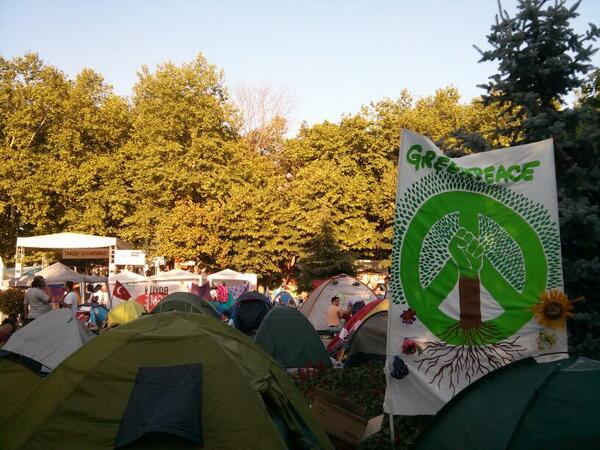
The park on the right is now a tent city, and that’s where the protest is taking place. It all started when the government announced it was going to tear down this area and build a replica of an Ottoman army barracks with a shopping mall potentially integrated into it. It’s one of the few remaining green areas in the popular Taksim neighborhood. The small group of initial protesters were attacked 5am in the morning, their tents burnt down, and trees started being uprooted. The news spread via social media, especially Twitter and Facebook, as well as SMS and phone calls, and people started congregating in the area in response. After massive clashes for about a day or so, the police withdrew and the area grew into a large tent city and a protest. (The police and the clashes returned yesterday). For most of my time there, it was a festival like space: loud and boisterous, with occasional breaks for tear gas.

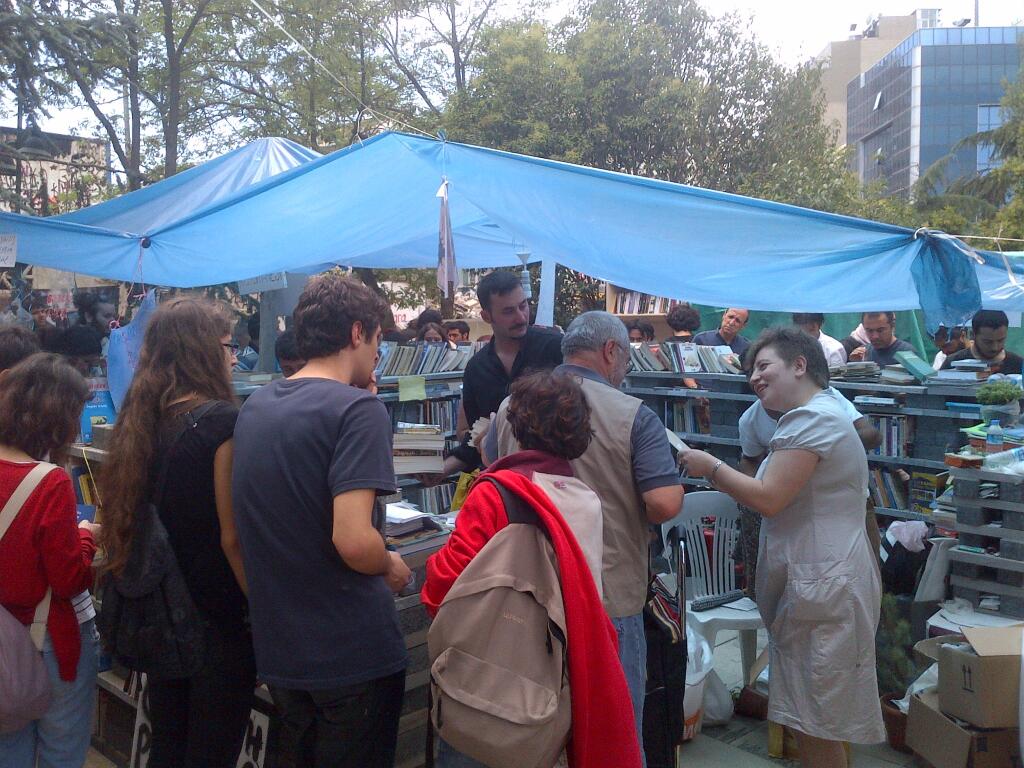
This is what the inside of the park lookseed like before the police attack last night:

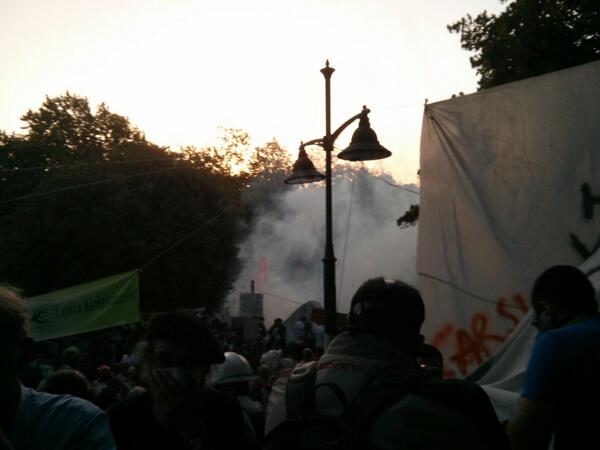
There are libraries (since destroyed by the police), food center, restrooms, theater, and lots of formal and informal activities within the park. It’s a lively, peaceful and colorful space. Here’s the library before:

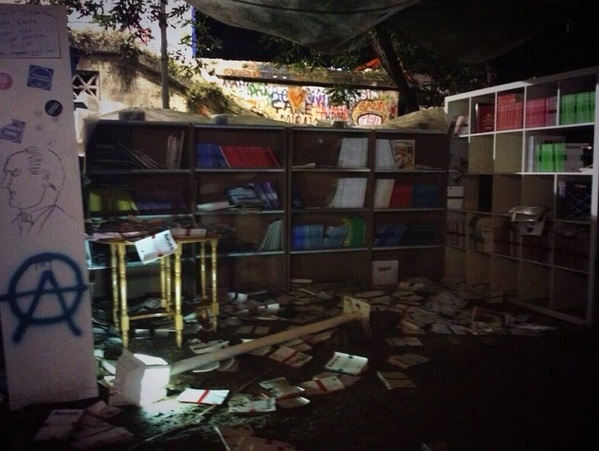
Well, here’s what the library looked like after the police entered the park on June 11th:

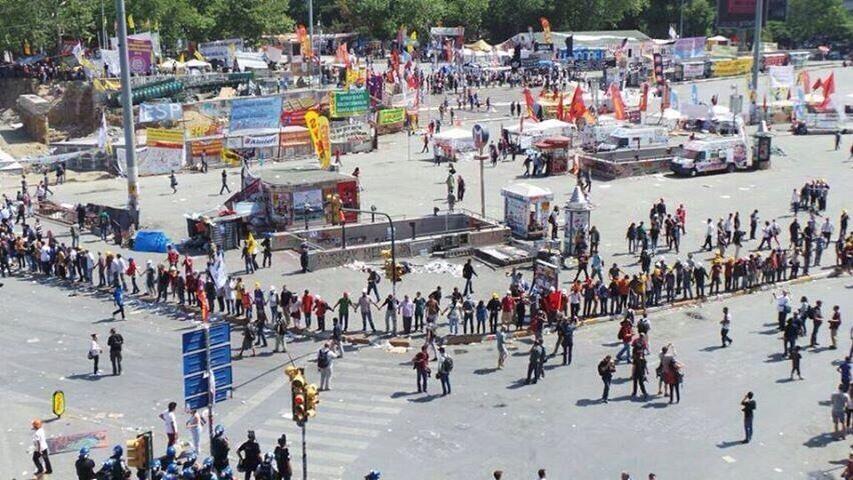
During yesterday’s clashes, there were indeed a few people who threw  ”Molotov cocktails” at the police in the square –which you may have seen on TV because that is the kind of visual that television stations like to put on a loop– but in my observations, the Gezi park protesters are very alien to that kind of behavior. In fact, during those very clashes they tried to form a human chain around the park and stop such violence from happening. They made calls via their megaphones for it to stop. I have walked most every inch of the park and spoke to a wide range of people. The protesters I spoke with expressed strong commitment to non-violence.

Here’s the human chain attempt to stop the clashes between police and the Molotov throwers (who were about six people) and to protect the park. The chain was dispersed with gas and water canons:

In fact, even the slightest scuffle is in the park calmed down immediately.  I observed this first-hand when a visiting youngster, about 14 or 15, tried to pick a fight with an older man claiming that he had looked at his girlfriend the wrong way. Dozens of people immediately intervened, calmed the youngster, took him away, helped his girlfriend, asked her if she was okay, and generally made sure it was all calm again. “Not here, no fighting, not here” is heard as soon as any tensions arise. People are very proactive. This is not a let-and-let-live space in those regards (though it is in many others).

There is also a campaign within the park, with many signs, asking people not to consume alcohol –yes, I know it’s ironic as government’s attempts to legislate lifestyle issues such as alcohol consumption are part of people’s grievances. However, people I talk to say that it’s very important that they keep the park clean, well-behaved, cooperative and non-violent. Signs everywhere say that “nothing is for sale in the park.” Food, masks, medical and other supplies, clothes, etc. are distributed free of charge. (There is also a burgeoning “street peddler” ring in the perimeter areas of the park, selling helmets, masks and, happily for me, fresh “simit”–Turkish sesame bagels.)

After talking to the park protesters for days here is a very quick compilation of the main complaints and reasons people say brought them to the park:

1- Protesters say that they are worried about Erdogan’s growing authoritarian style of governance. “He thinks we don’t count.” “He never listens to anyone else.” “Why are they trying to pass laws about how I live? What’s it to him?”

Erdogan’s AKP party won the last election (its third) and is admittedly popular with many sectors of society, including some who are now in the Park have voted for him. It has accomplished many good things for the country through a program of reform and development. Any comparisons with Mubarak and pre-Tahrir 2011 Egypt are misplaced and ignorant. The country is polarized; it is not ruled by an unelected autocrat who has alienated everyone.

However, due to the electoral system which punishes small parties (with a 10% barrier for entrance to the parliament) and a spectacularly incompetent opposition, AKP has almost two-thirds of the deputies in the parliament with about 50% of the vote. Due to this set up, they can pass almost any law they want. People said to me “he rules like he has 90%.”

So, that seems to be the heart of the issue. People have a variety of grievances, but concentrate mostly about overreach and “majoritarian authoritarianism.”

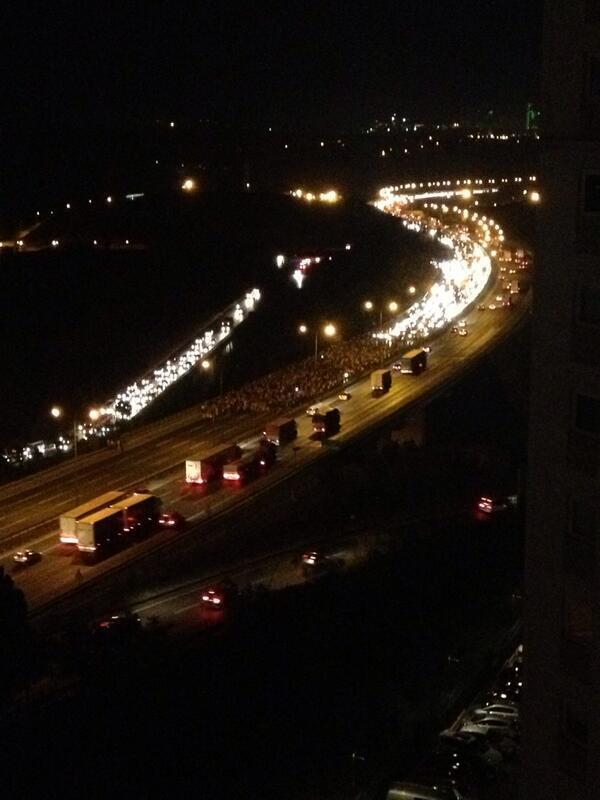
For example, Erdogan recently announced that they would be building a third bridge over the Bosphorus strait. Many people felt that the plan was not discussed at all with the public and concerns about environmental impact ignored. Then, he announced that they had decided the bridge would be named “Yavuz Sultan Selim”–an Ottoman king (“padisah”) famous for a massacre of Alevi (Turkey’s alawites) populations. Unsurprisingly, Alevis who compromise a significant portion of the Turkish population were gravely offended. In the predominantly “GAzi” (not Gezi) neighborhood, people have been marching every night since the Taksim protests began. Last night, they blocked the main TEM highway for a while before voluntarily dispersing.


I asked someone from the Gazi neighborhood (GAzi neighborhood is not GEzi park.) why they were so angry and why there were protests there every night. “Wasn’t there anyone else in all of Turkey’s history to honor with the name of that bridge?” the person said. “Doesn’t he have a single Alevi friend to ask? Why can’t they ever ask someone about anything before announcing their decision?”

During the protests, Erdogan called the protesters “riff-raff” (capulcu) which has now been adopted by the protesters–they jokingly call themselves the riff-raff party. They are offended but also decided that they will call just respond with humor. Such dismissive language, undoubtedly, helps polarize the situation. “Why can’t he let us even have one little park?” was a common refrain among the people I interviewed. “Why must everything be his way?”

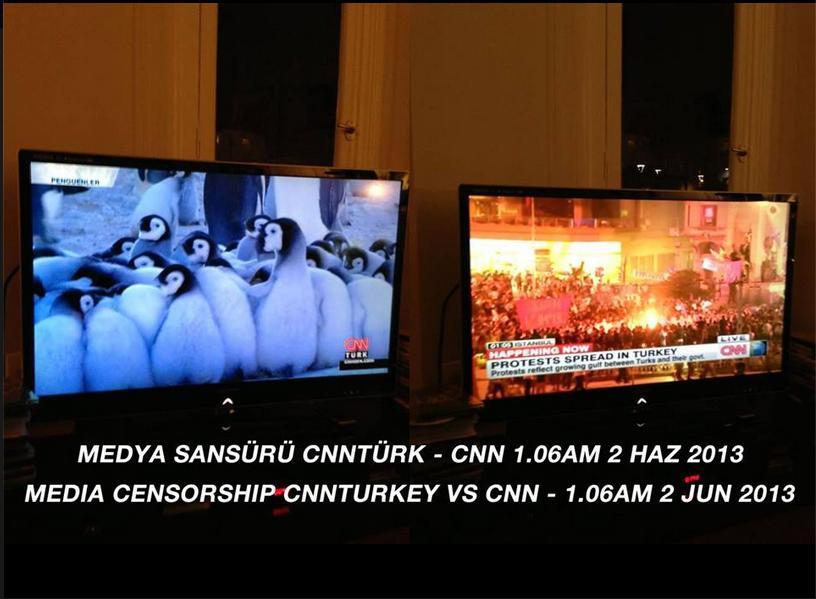
2- A very common and widespread complaint is about censorship in traditional. It is, indeed, much worse than I had thought. I had already blogged about how the CNN Turkey was showing penguin documentaries while the initial major clashes were ongoing, and while CNN International had a live feed to the clashes.

In the square, I chatted with journalists and people who told me they were journalists but joining the protests after their shift ended. They told me, some in tears, that they are not free. They said that the stories they file are shelved. One told me of being told “why don’t you rewrite this column” after writing a sharp critique of Erdogan’s stance during Arab Spring versus his stance now towards the protests.

I watched last night as the governor of Istanbul was “interviewed” on television on CNN Turkey (it’s not the worst or only awful one, but it’s notable.) There were ongoing clashes all day, in the middle of the biggest city in Turkey. The governor had said in the morning that the park would not be attacked. I was in the park all day and was tear gassed on and off all day–this was thoroughly documented. (I left when things got much worse and I couldn’t breathe, or obviously do interviews anymore. I’m there to interview, not to be tear gassed beyond rhyme or reason).

Instead of asking him tough questions, or even things that could be considered any kind of questions, the “interviewer” lobbed phrases that were so non-questions that “softball” would be a compliment. The “interview” ended with the “interviewer” asking the governor that perhaps they should end by having him repeat his call to parents. Oh, yes, the governor said. That’s a good note: “Parents should tell their children not to be in the park anymore. It’s not safe.” That is what passes for an interview.

Also, the few channels who were broadcasting the protests live were JUST hit by large fines by Turkey’s regulatory agency, RTÜK, for “inciting people to violence.” The level of control over the public sphere via media is worse that I had thought, and I was already worried. The journalists I spoke with said to me that it’s not just intimidation by government–many media publishers are also large conglomerates and want to keep good relations with the government for their business interests.

Unsurprisingly, social media, especially Twitter and Facebook have emerged as key protest and information conduits. Turkey also has no equivalent to “Al Jazeera” which played a major role during the Arab Spring. Most protesters I talked with said that this just wouldn’t be possible without especially Twitter and Facebook. Most people heard of what was going on in the park during the initial police attack (when the protest was small, the police moved in, burned the tents and started cutting down the trees) via Twitter and Facebook and showed up to try to protect the park. They couldn’t have heard it on mass media because it was broadcasting anything but the news. Penguins have become a mock symbol of the protest.

3- The police actions are a common cause of complaint among the protesters. The use of tear gas is quick and massive. This is not the first protest that has been subjected to massive tear gas. In fact, it seems to have become a modus operandi and main style of policing of demonstrations. Yesterday, while I was in the park, tear gas volleys regularly landed in the park. My interview recordings are interrupted by “gas breaks”: a bang, coughing. I watched people convulse and throw up from tear gas. I witnessed tear gas being thrown into the park when it was very crowded, creating a dangerous situation as people tried to run away and risked trampling. The park is experienced, though. As people panicked, lots of seemingly experienced protesters, started yelling for people to calm down, opening exits, helping people.


One of the key demands of the protests is freedom as assembly and freedom from this kind of police intervention.

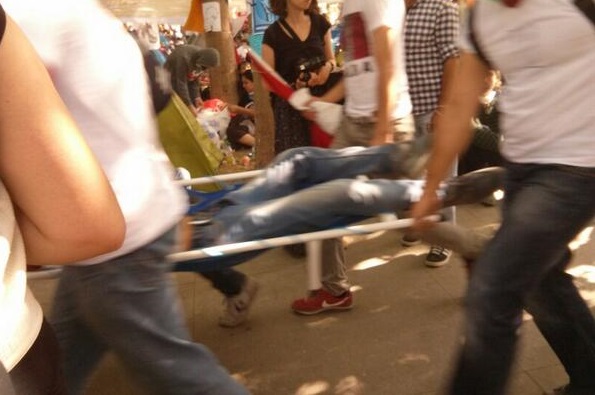
Also, protesters were hit with tear gas canister–what had also happened in Egypt and killed many people. I personally saw a young man bleeding from the head on a stretcher being rushed to the “field hospital” area–which also got attacked with tear gas later. After him, another man came sobbing through the area. “They are aiming the canisters at our head. Aren’t they human? Aren’t we human?” he sobbed.

Here’s a picture I took of person in stretcher–he was bleeding from his head, not captured in the photo:

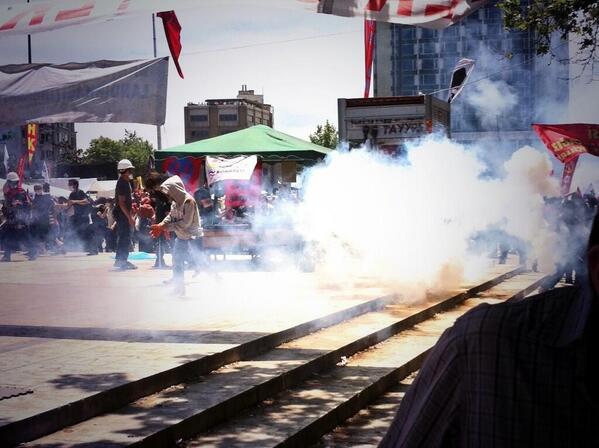
Here are some pictures during the day when the tear gas was lobbed inside the park. I don’t have a picture for some of the worst clashes when the park was basically engulfed in massive amounts of gas partly because it was a difficult situation and also partly because some of the worst happened after I left. These pictures are from June 11th, when the governor said the park would not be attacked.

I did not take this picture but it shows you how it can get:

This one I took–one of the many tear gas volleys fired into the park while I was there on June 11th.

I personally think tear gas should be regulated internationally and be used only in truly and rarely dangerous situations. We need an arms control treaty on tear gas. Not only is it not non-lethal, it has become a way to deny freedom of assembly. I understand that there are some situations that the police do need to use non-lethal force. The situation, however, seems out of hand–instead of a high bar for use of this substance, it has become something that is just lobbed.

I know that now I am going to be criticized heavily by some people in Turkey. Let me end with some clarifications. I have friends who are and remain strong AKP supporters and they, too, are mostly aghast at what has been happening. I’ve always tried to explain that the government has popular support and remains popular; however in a polarized country.

Rumors of Internet shut-down are false. In fact, throughout the protests, I have been able to tweet, with pictures, from the park (some mobile operators brought extra repeater trucks to the area). I lost Internet only once–during the worst clashes– and I later learned that one of the repeater trucks was on fire, likely contributing to the problem as well as tens of thousands of people desperately trying to call out. However, I witnessed the ridiculous levels of media censorship first hand and I heard some stories directly from journalists.

Some people asked my why I don’t go interview AKP supporters and their use of social media? In fact, I’d be happy to, at some point. I study social movements and social media so it is natural for me to interview protesters. The notion that AKP supporters do not use social media is false. The idea that AKP is just behind the times with such technologies is also false. The prime minister did indeed call Twitter a menace (or curse) to society, but all his top lieutenants are on social media and very active. So are, as far as I can tell, large portions of AKP’s own public. AKP is a tech-savvy party full of competent people. There is simply no comparison to Mubarak’s inept misunderstanding of the new media ecology.

And that’s it for now. I am now going to go back to the battered, tired Gezi Park and continue doing interviews for as long as I can. I shouldn’t have to interview with a helmet, though, in fear of tear gas canister landing on my head. The governor keeps promising that the park won’t be attacked. Here’s me interviewing yesterday in the park, and here’s hoping to less tear gas.


"Come, Come, Whoever You Are.” As a Pluralist Movement Emerges from Gezi Park in Turkey

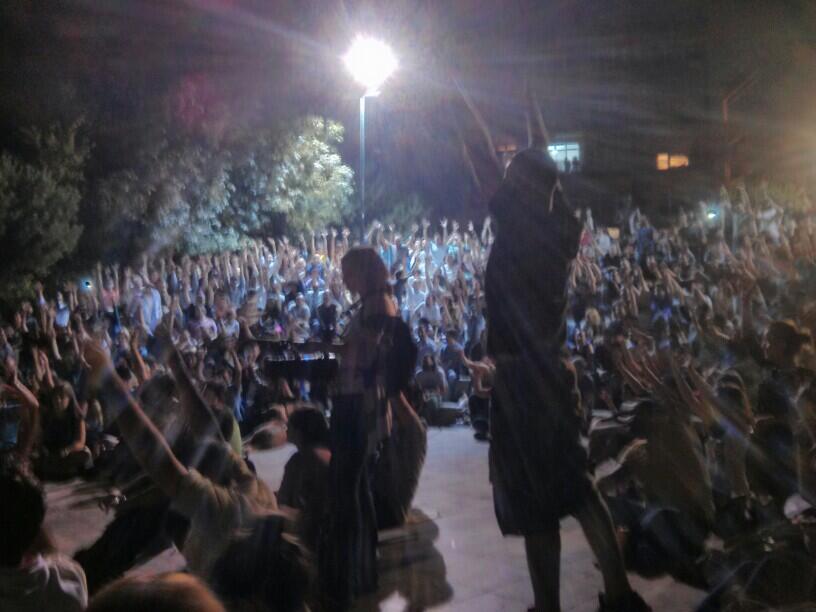
After the Gezi Park occupation was dispersed, dozens of neighborhood forums popped up around Istanbul where people get together to discuss a variety of issues. I’ve been attending these neighborhood forums, which are are organized in an “agora” format where speakers line up and take turns to speak. While media attention remains on the  frequent Taksim Square demonstrations, the forums are lively, continue to be well-attended and are breaking precedent in Turkish politics which started with Gezi. To give a sense of the space, here’s the Abbasaga forum in Besiktas (at 12:30a on a Friday).

In Gezi, one thing that struck me and that I’ve been tweeting about, and that came up in many of the 100+ interviews I conducted with the participants was the spirit of tolerance and diversity. Gezi protests participation included people ranging from nationalist/traditional Kemalists to Kurdish political parties, from the  ”internet generation” youth (as they are referred to here) to feminists, from “revolutionary muslims” to many ordinary citizens who do not fit into any of these categories.

(By the way, the media, both here and abroad are missing the story–during the Gezi occupation, they concentrated on the occasional clashes in Taksim square. Now, during the neighborhood forum process, they still only cover Taksim protests. While important, that is not where the heart of the story is).

Many people I interviewed in Gezi told me that, for the first time, they found themselves talking with people with whom they had rarely interacted, with whom they had harbored prejudices, and with whom they had never had this kind of deep, political and substantive conversations. It emerged as the most personally satisfying aspect of the Gezi Park experience for many participants.

This unity was helped along by the police repression as well as  Erdogan’s totalizing, polarizing rhetoric in which protesters were alternatively referred to as marginals, looters (“çapulcu” which became the term they adopted for themselves), terrorists, etc. Being stereotyped in so many negative ways helped create this identity of one of unity and tolerance within difference.

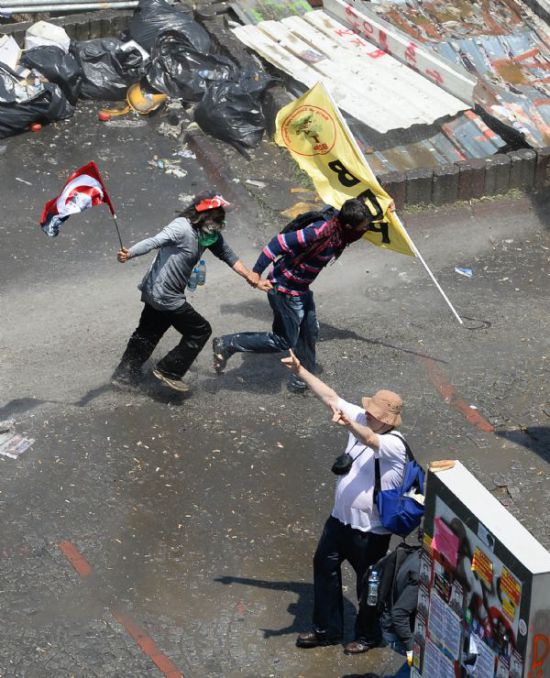
A famous photo from the Gezi Park period illustrates has become a symbol of this Post-Gezi politics in Turkey.

Running from the police in this picture are  two youths, holding hands, one carrying  a flag from the Kurdish BDP party and another an Ataturk (Kemalist) flag (ideologies that almost never speak to each other, or at least kindly). At the corner, another man makes the “wolf” sign that is traditional to ultra-nationalist Turks.


To be honest, had I not seen, interviewed in, and experienced Gezi myself, I’d be trying hard to figure out if this was photoshop. One can’t help by feel incredulous by such scenes in Turkey.

It is, however, a true picture–a pluralist generation has sprung up in Turkey under AKP’s strong rule partly because of it, and partly as a reaction to it. And that, mostly, is at the heart of the political crises that is fueling Gezi. This pluralism has no political expression and no real reflection in mainstream media, which is a little more than a government parrot these days, or even “opposition” traditional media which remains relatively firmly encamped in totalizing or outdated ideologies.

(A “dissident” TV station I watched last night –”Halk TV”– was trying to sell a “support package” which included pictures of Ataturk, stickers of Ataturk, flags of Ataturk, a book of Ataturk, a t-shirt with Ataturk’s saying and a poster of Ataturk–hardly an advanced political message in 2013 for a complex, diverse, modern county like Turkey. Such dissent, little more than repeated waving of many pictures of Ataturk, is not attractive especially to the youth, including secular youth, I spoke with in Gezi Park.)

In sum, in Turkey, there is no political party or institutional infrastructure which reflects this generation or this emerging pluralism. In fact, people often call this “Gezi ruhu” or “spirit of Gezi” to try to find a name for this unprecedented political coalescence.

I have come to think of this moment as an anti-postmodern pluralism. Unlike early stage (or, well, “traditional”) postmodern approaches, the “other” is not configured as an opaque, unknowable, “outside” entity. There is multitude but there is also unity and a unifying grand narrative–a unity that is based on empathy rather than a single model of the desirable. The “other” is knowable through common human experience and suffering.  Hence, this is not like post-modernity which rejects unity or gran-narratives. In fact, it is striking how strong the grand, unifying narrative is among many participants.

In this non-post-modern pluralistic sensibility, there is an emphasis on shared stories but these stories are constructed not through erasing difference but through emphasizing empathy, tolerance and shared respect. Unlike traditional modernity which attempts to create one type of individual (a political ideology that characterizes both pre-AKP Turkey and, increasingly, post-AKP Turkey even though the “one type” being attempted has shifted significantly), difference is not fetishized, it is acknowledged as the basis of tolerance. “I’m against homophobia and islamophobia”, a young forum participant said, not seeing any contradictions in his stance: “I want the headscarf to be free and I want gay people to be free.”

As such, pluralism and tolerance are perhaps the most significant political values emerging in the post-Gezi politics.

For example, after a shooting in Kurdish Lice over tensions about building of new military posts, people in forums in Besiktas and Kadikoy, nationalist strong-holds, marched in support of Kurdish grievances. This would have been hard to imagine a month ago.

I have seen feminists conduct workshops in Gezi –specifically targeted to to soccer fans– on why they should not use misogynistic insults.

Muslim groups in Gezi distributed “kandil simit” –traditional for Prophet’s birthday– in Gezi and held prayers on that Islamic holy day.

I’ve seen Muslim groups praying in Gezi while a woman with crewcut, punk haircut –clearly not part of “them”– shood away journalists trying to take pics, who she thought was not respectful to their prayer. “They are praying, not putting on a show for you” she exclaimed and made the journalists keep their distance.

Perhaps the most interesting configuration to have emerged from the Gezi protests has been the LGBT community in Turkey. Long oppressed, it is also a community that has long struggled openly. Unlike other countries in Middle East, Turkey has a strong and burgeoning LGBT community that is increasingly coming out of the closet and organizing.  Like other countries in the Middle East, they face grave prejudice and oppression.

LGBT neighborhoods (Turkey’s “Castro”) in Istanbul are concentrated around Taksim and Gezi Park is, so to speak, in their backyard. They were among the first protesters to try to protect the park and they have been central to its defense and organizing from the beginning. Along the way, they have acquired respect and status among many people who participated in the Gezi process.

Another key player in the Gezi protests  has been “Carsi” –Turkey’s ultras who are fans of Besiktas soccer team. Carsi is known for their rowdy marches, bravery, somewhat unusual ingenuity which at one point involved hotwiring a back-hoe to push back against police APCs, and, unsurprisingly, their machismo.

Hence, some examples from the interaction between Carsi and LGBT organizations, two big players in Gezi Park resistance, illustrates  the fascinating interaction emerging in this process.  A favorite slogan for soccer fans in Turkey is “ibne hakem” or “the referee is a fag.”

Predictably, soccer fans adopted this slogan to politics in Gezi and started referring to various AKP officials as such. Predictably, the LGBT folk were not happy. They approach the soccer fans, Carsi, and asked them not to refer to AKP politicians –or others– as “ibne.” “We are the fags and real fags are here defending Gezi Park” they explained to the bewildered Carsi supporters who probably had rarely seen anyone proclaim the identity as a source of pride. However, Carsi had also seen the LGBT folk brave police repression–which the LGBT people explained is part of everyday life for them. Soccer fans, too, had often experienced clashes with the police.  An understanding was not impossible.

After some back and forth, Carsi soccer fans countered that they might drop “fag” but they needed good insults. “How about sexist Erdogan?” was a suggestion from the LGBT contingent. So, this all ended with Turkey’s ultra-macho soccer fans chanting “Sexist Erdogan.”

In another instance in Gezi Park, I witnessed a Kurdish “teyze” (an older, traditional woman) from southeast Turkey in a heated, compassionate conversation with one of Istanbul’s better known transgendered activists. The dialogue, which I witnessed, was mostly about the need to love and understand each other’s suffering. During this conversation, the Kurdish “teyze” spoke in a thick, Zaza (a dialect of Kurdish) accent while the transgendered activist hugged the rainbow flag he had been waving and used speech locutions that are very specific to the gay community in Turkey. It ended up with them hugging in tears, vowing to keep in touch.

It also ended with me having to sit down to catch my breath that I had just witnessed what I had just witnessed.

I’m not sure I’d have believed all this was possible a month ago. Clearly, though, it was in the making–it did not come out of nowhere.  Rather, AKP’s strong hand in governing has created constituencies for whom plurality and tolerance is a key value. As one Gezi participant said to me: “my problem is that this man [Erdogan] wants to paint us all black. We are a rainbow! There are many colors!” Hence, this tolerance was not just a momentary convenience, but a value that has emerged from an experience of feeling and being shut out.

It’s unclear how much this pluralism will carry on in the future–or how widespread it is in the country in general–but it is a striking and a potentially deeply transformative experience for the participants in the Gezi process as well as the ongoing neighborhood forums.

So, I come to today. In a few hours, the 11th LGBT pride march will start in Taksim. It is the first march with a “permit” in Taksim since the beginning of Gezi protests (though nobody really seems to be taking permits that seriously these days). Many groups, well, pretty much everyone, who has been a part of the Gezi protests will be attending. Most neighborhood forums I attended have expressed a desire to march as well.

This might be the first time that Turkey’s LGBT community leads –and is not just tolerated– a large and diverse march of dissenters whose unifying ideology is emerging as tolerance and plurality.

Today, in Turkish twitter, “#direnayol” is trending which brings together Gezi politics with LGBT symbolism.

In Turkish, “diren” means to resist and has become the symbolic word of the Gezi protests–”#direnankara” to refer to protests in Ankara, for example. When AKP youth floated a badly photoshopped image suggesting that the famous pepper-sprayed “women in red” was was an actress and the whole thing was a set up (there is ample video and multiple Reuters photos of the pepper-spraying incident), twitter users started joking with #direnphotoshop–resist, photoshop.”

“Ayol” on the other hand, is the Turkish linguistic equivalent of a “limped wrist.” It literally connotes a sense like “darling.” So, to say “gel, ayol” is a bit like saying “come, darling.”  In Turkish “ayol” is also a symbol of gay speech, a locution that can be added to  sentences to convey a queer sensibility. For example, “Ayol, it’s an actual revolution” (“ayol, resmen devrim”) had become a slogan of the LGBT community during the Gezi events.

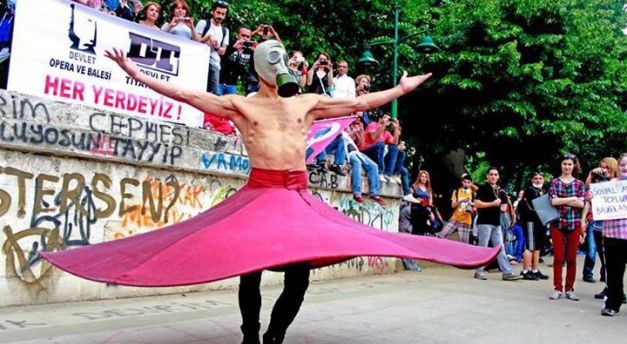
During the Gezi Park Protest, a whirling dervish in a gas mask visited Gezi park (of course, right?) and the image was widely circulated, often along with the saying “Sen de Gel” — a saying meaning, “you, too, come”, from a sufi poem by Rumi.


Today, along with the #direnayol hashtag, the following image has been circulating in Turkish Twitter, uniting the LGBT rainbow flag (a very recognizable symbol in Turkey), the dervish, the gas mask, and the call: “You, too, Come.”:

The Rumi poem “Sen de Gel” is inscribed in his shrine in Konya, Turkey and was perhaps best translated in spirit by Coleman Barks:

Come, come, whoever you are,
Wanderer, worshiper, lover of leaving.
It doesn’t matter.
Ours is not a caravan of despair.
Come, even if you have broken your vows
a thousand times.
Come, yet again, come, come.

So, perhaps, I’ll end by answering a question many friends of mine have asking me–should I come to Turkey during these turbulent times? I’ll repeat the answer I’ve been giving all along. Yes. I’ve even joked that the unsafest part of my visit to Turkey was the ride from the airport in a taxi that had removed the seatbelt–and I mean it. Istanbul is a big city and usual big city precautions apply–and Taksim at the height of a protest is not advisable if you have children with you.

Tuesday, December 25, 2012

UYAN EY TÜRK UYAN - AKP Genel Merkezi' nin canını oldukça sıkan bu Elektronik Posta bugüne kadar tam 16 milyon kişi gördü...


* İşte AK Parti' nin canını çok sıkan o mail:

Türkiye' deki icraatlarının unutulmaması ve bakar körlerin gak guk etmemesi için Tayyip Erdoğan liderliğindeki AKP' nin Türk siyaset tarihindeki bazı ilklerini hatırlatmakta yarar görüyorum.

* 1- İlk defa bir Başbakan " Tezkere geçmezse memura maaş ödeyemeyiz " dedi
*2- İlk defa ekonomi büyürken işsizlik arttı.
*3- İlk defa cari açık verilirken döviz kuru arttı.
*4- İlk defa bir Başbakan zam isteyen memura " İMF' yi ikna edin " dedi.
*5- İlk kez ithalat 100 milyar doları aştı.
*6- İlk kez cari a çığın üstünde borçlanma yapıldı
*7- İlk kez Yunan kilise bankası Türkiye' de banka satın aldı.
*8- İlk defa domuz, kesimlik hayvanlar arasına alındı
*9- İlk defa düşük faizli dış borç, yüksek faizli iç borç ile ödendi.
*10- İlk defa bir Başbakan ve Dışişleri Bakanı, islâmiyeti yok etmeye yemin eden bir Papa' nın heykeli önünde fotoğraf çektirdi.
*11- İlk defa bir Başbakan " Toprak satılıyorsa alıp götürmüyorlar ya " dedi.
*12- İlk defa bir cami kiliseye çevrildi.
*13- İlk defa kilise ve havralar imar planında yer aldı.
*14- İlk defa bir Başbakan Yahudi düşünce kuruluşundan " Üstün Cesaret Ödülü " aldı.
*15- İlk defa Türk askerinin başına ABD güçlerince çuval geçirildi.
*16- İlk defa bir Başbakan " bir dönem dini kullandık " dedi.
*17- İlk defa petrol kanunu ile yabancılara 50 yıllık imtiyaz verildi.
*18- İlk defa yabancı rantiyecilere vergi muafiyeti tanındı.
*19- İlk defa iletişim sektörünün tamamı yabancıların eline geçti.
*20- İlk defa tezkere ret edilmesine rağmen Dış İşleri Bakanlığı genelgesi ile silahlar Türkiye üzerinden geçti.
*21- İlk defa bir Başbakan İslâm dünyasının sınırlarını değiştirecek BOP' un eş başkanı oldu.
*22- İlk defa bir Başbakan Müslüman topraklarını işgal eden ABD askerlerinin evlerine sağ salim dönmeleri için dua ettiğini açıkladı.
*23- İlk kez İsrailli bir işadamına çok gizli bir şekilde 800 milyon dolar kaynak aktarıldı.
*24- İlk defa bir Başbakan yapılan ihalede önce uçak istedi ama sonra Mercedes' e razı oldu.
*25- İlk defa fındık üreticileri en büyük mitingi yaptı.
*26- İlk defa bir Başbakan Türkiye' yi pazarladığını açıkça itiraf etti.
*27- İlk defa tarımsal üretimde dış ticaret açığı ortaya çıktı.
*28- İlk defa bir Başbakan çiftçilere " Gözünü to p rak doyursun " dedi.
*29- İlk defa kap kaç diye bir sektör ortaya çıktı.
*30- İlk defa zina suç olmaktan çıktı.
*31- İlk defa bir Başbakan en fazla yurt dışı gezisi yaptı.
*32- İlk defa bir Başbakan " Borç yiğidin kamçısıdır " diyerek borçlanmayı bir başarı olarak gösterdi.
*33- İlk defa enflasyon % 10 artarken pancar fiyatları 99 kuruştan 88 kuruşa indi. *34- İlk defa çiftçi ve emekliden vergi alınması sözü verildi.
* 35- İlk defa bir Başbakan Danışmanı Amerikalılara Başbakan için " Bu adamı kullanın, onu rogara süpürmeyin " dedi.
*36- İlk defa GSMH artarken KDV tahsilâtı yerinde saydı.
*37- İlk defa bir Başbakan TMSF katkısıyla bu kadar çok TV ve gazete yönlendirdi. *38- İlk defa Türkiye Cumhuriyeti' nin Cumhurbaşkanı misafir olarak gelen bir kralın ayağına gitti. Hem de 10 Kasım günü. < /u>.
. *39- İLK DEFA BİR BAŞBAKAN ÇİFTÇİYE " ANANIDA AL GİT " DEDİ...
*40- İLK DEFA BİR BAŞBAKAN ŞEHİD ZİYARETTİNDE " ASKERLİK YAN GELİP YATMA YERİ DEĞİLDİR " DEDİ *41- İLK DEFA BİR BAŞBAKAN 300 METRELİK GEMİYE GEMİCİK DEDİ.
*42- İLK DEFA BİR BAŞBAKAN ..... GAZETELERİNİ OKUMAYIN TELEVİZYONLARINI AÇMAYIN DEDİ.
*43- İLK DEFA BİR BAŞBAKAN ATATÜRKÇÜ DÜŞÜNEN İNSANLARI DİNSİZLİKLE SUÇLADI.
*44- İLK DEFA BİR BAŞBAKAN İÇİN CUMHURİYET MİTİNGLERİ YAPILDI.
*45- İLK DEFA BİR HALK KENDİ LÂİKLİĞİNDEN VE ÖZGÜRLÜĞÜNDEN KORKTU...
*46- İLK DEFA ATAMI ANLIYORUM.
Bu hızla Tayyip Erdoğan b u dönemde ülkemizde ki her şeyi özelleştirmiş olacak... İş bu ya özelleştirmeye ve satmaya kafayı takmış olan başbakanımız en sonunda kendisini özelleştirir mi?
*- Türk Telekom, Arap' ın.
*- Telsim İngiliz' in.
*- Kuşadası Limanı İsrailli' nin.
*- İzmir Limanı Hong Konglu' nun...
*- Araç muayene işi Alman' ın.
*- Başak Sigorta Fransız' ın.
*- Adabank Kuveytli' nin.
*- İETT Garajı Dubaili' nin.
*- Avea Lübnanlı' nın.
*- Petkim? Ermeni' nin. ( Kazak'a sattık, dediler. Kazağı bir çıkardık Ermeni...) *- Rakı, Amerikalı' nın.
*- Finansbank Yunanlı' nın...
*- Oyakbank Hollandalı' nın.
*- Denizbank Belçikalı' nın.
*- Türkiye Finans Kuveytli' nin.
*- TEB Fransız'ın.
*- Cbank İsrailli' nin.
*- MNG Bank Lübnanlı' nın.
*- Alternatif Bank Yunanlı' nın.
*- Dışbank Hollandalı' nın.
*- Şekerbank Kazak' ın.
*- Yapı Kredi' nin yarısı İtalyan' ın.
*- Turkcell' in yarısı Finli' nin Rus' un.
*- Beymen' in yarısı Amerikalı' nın.
*- Enerjisa' nın yarısı Avusturyalı' nın.
*- Garanti' nin yarısı Amerikalı' nın.
*- Eczacıbaşı İlaç, Çek' in.
*- İzocam, Fransız' ın.
*- TGRT ( Fox ) Amerikalı' nın.
*- Demirdöküm Alman' ın.
*- Döktaş Fransız' ın.
*- Süper FM Kanadalı' nın. Hepsi TÜRK' tü bir zamanlar... sadece 8.5 yıl önce. ( yani AKP hükümetinden önce

Wednesday, April 06, 2011

Rakamlarla Türkiyenin son 8 Yılı (2002-2010)

Okuyalım- Paylaşalım, Türkiyemizin ekonomisinin (hani şu büyüyor deni...len ekonomnin) ne hale geldiğinii herkes görsün, herkes bilinçlensin.


Hiç bir siyasi partiyi propaganda etmek amaçlı değildir bu resim, sadece mevcut iktidarın ülkeyi düzgün bir biçimde yönetemediğinin ekonomi penceresinden görünüşüdür..

Friday, September 24, 2010

SAYIN ÇOŞKUN; BURASI DEMOKRATİK BİR ÜLKE, HABERİN YOK MU? BU YAZI YAYIMLANIR MI?

Sanat galerisi acilisina yapilan saldirilar ve Bekir Coskun'un isten atilisi nedeniyle, 12 Eylul'un ardindan henuz bir ay dahi gecmemisken, "demokratik" degil "baskici" ve toplumu "korkutan" ve modern yasami tehdit eden uygulamalarin bu kadar hizlica sahnelenmesi, cok endise verici ve dusundurucudur.


BEKİR COŞKUN’DAN, HABERTÜRK’ün Yayımlamadığı
12 Eylül referandumu yazısı


Bekir Coşkun, Habertürk’teki köşesinde, 12 Eylül’de yapılacak olan referandumu yazdı. Coşkun, 12 Eylül darbesiyle bugün yaşananları yan yana koydu.”

Evet” derseniz, ikiziniz olacak...
“EVET” derseniz iki tane “12 Eylül”ünüz olacak...
İkiz “12 Eylül”ler...
Birbirinden farksız...
Koyun Mamak’ın yerine Silivri’yi...
GATA gibi hastaneler, diyelim ki o günlerde yaşlı siyasetçilerin kapatıldığı Zincirbozan...
Fişlemelerin yerine telefon dinlemelerini koyun...
Kenan Evren’in yerine, tek karar verici, tek adam, tek ses, tek seçici Tayyip Erdoğan’ı oturtun...
Eğil...

O tek kişinin akşam aklına geleni sabaha kanunlaştıran bir parlamento...
Adı ister “Kurucu Meclis” olsun, ister “Temsilciler meclisi”, ister “Türkiye Büyük Millet Meclisi”...
Oturtun; Sadi Irmak’ın yerine Mehmet Ali Şahin’i...
Eğil...

Korku aynı korku...
Sabah karanlıklarında evlere baskınlar bire bir...
Sorgusuz-sualsiz alıp götürülenler...
Mahkûm olmadan iki sene hapiste unutulanlar tıpatıp...
Kovulan-atılan-içeri tıkılan gazeteciler, profesörler, aydınlar...
Sinmiş sermaye, pısmış sendikalar...
Asılanların yerine; yüreği dayanamayıp erken çekip gidenleri, kendi şakağına kurşun sıkanları, ranzasının demirine kendini asanları düşünün...
Eğil...

Ve yine sonunda bir anayasa referandumu...
Birinci 12 Eylül’ün asker darbecilere dokunulmazlık sağlayan geçici 15’inci maddesi kalkıyor... Bu kez yerine; sivil darbecilere dokunulmazlık sağlayacak aynı işlevde üç madde geliyor...

Tarih yine 12 Eylül...
“Evet” derseniz...
İki tane “12 Eylül”ünüz olacak...
Birinci; 12 Eylül...
İkinci; 12 Eylül...
Nasıl ki bugün inkâr edip de, birincisine “evet” demekten utandınız...
Aynısı olacak...
İkizine “Evet” derseniz...
Utanacaksınız...


Nacizane goruslerim...

Bugun %58 refaranduma evet dese ve bu ulkede anayasa degisse ne olur degismese ne olur? Bir ornek vereyim: Bizim anayasamizdan cok daha ciddi sorunlarimiz varken biz kalkip eyvah “EVET’ cikti, simdi yargi bagimsizligi yok olacak diye kendimize dert ediyoruz. Yargi bu ulkede zaten bagimsiz degildiki bu anayasa degisikligi ile de bagimsiz olsun. Yargi ne zaman bagimsiz olur; yargi mensuplari parayla satin alinamayacaklari zaman! Bu anayasa degisikligi ile biz iktidarin yargi ustunde cok buyuk bir etkisi olacagini ve Turkiye'de herseyin degisecegini zannediyoruz ya; Turkiye'de yargi ustundeki tek iktidar parti marti degil paradir PARA! Turkiye'de yargi alinir satilir. Denetleyen adalet bakani olsa ne yazar, yada muhalefetin onerdigi baska bir organ olsa ne yazar?  Yani demek istedigim burasi yozlasmis ve degerlerini yitirmis bir ulke, hersey para ile cozuluyor. Butun sorunlar para ile ilgili basliyor ve butun cozumler para ile bulunuyor.

Bu ulkede 30 senedir suren ve milyar milyar dolarlarimizi yiyen bir savas var. Bitmesin diye icerden ve disardan destek goren bir savas. Bitmeyince ne olacak? Dunyada bizim aklimizin alamayacagi buyuklukte bir savas lobisi var, bir yerlerden beslenmesi lazim. Bunun icinde dunyanin herhangi bir az gelismis yerinde sosyal-ekonomik veya politik krizler cikmasi lazim. Bizim yasadigimiz krizlerin sadece ulke dinamikleri oldugunu mu zannediyoruz? Hepsi savas ekonomisinin maarifeti. Kimin alet oldugunu saniyorsunuz? Sadece AKP'nin mi? Yoksa gelmis gecmis butun siyasilerin mi? Sadece Turkiye'de mi oluyor bu, yoksa dunyanin her yerinde mi? Hatta bazen kaosu cikaran ulkenin kendi icinde kendi vatandasina karsi hizmet eden satilmislar. Somurdukleri sey yer alti yer ustu zenginliklerimiz veya yargi sisteminiz degil yani. Cunku tum dunyada cikartabildikleri kadar savas cikartabildiklerinde zaten sondajla, raporla, iscilikle, hakimle, savciyla ugrasmaya gerek kalmadan hatta nukleer enerji gelirlerinin bile milyon katindan fazla para kazanabiliyorlar; ustelik ustune kan sicrayan da kendileri degil, her ulkenin kendi evladi...

Biz hepimiz aslinda ayni seyi soyluyoruz ama ayni zamanda butun bu pespaye ortamin faturasini su anki hukumete kesiyoruz. Cunki olay bizim acinizdan kisisellesmis. Ulkenin gecmisten gelen eksikleri gozumuzde silinmis. Herseyi Ataturk dusmani AKP mi berbat etti, onlar gelmeden yeryuzundeki en medeni en demokratik en gelismis en huzurlu ve mutlu ulkesi bizmiydik, yada oyle gibi bir tablo mu ciziyorduk? AKP iktidari oncesinde heralde cok mutlu ve mureffeh bir hayat yasiyorduk, ben kacirmisim.

 
Demek istedigim bizi yonlendirmek isteyenlerin tuzagina duserek bu ulkenin gelmis gecmis tek sorununu AKP olarak gordugumuz muddetce, her secim sonrasinda "allah allah bu halk neden benim sectigimi secmiyor?" diye hayiflaniriz, daha da ileri gidip bizim gibi dusunmeyenleri aptal ve cahil ilan ederiz ve kutuplasmaya yonleniriz. Sorunun kendisiyle yuzlesmek gibi bir derdimiz olmaz zira. Boyle olunca bu cahil ve aptal ilan ettigimiz halk da eline gecen her firsatta, kendisini dislayan, cahil ve hor goren insanlarin tam karsisinda kim varsa ona oy verir. Bu zamaninda Demokrat Parti idi, sonra Adalet Partisi oldu, simdi de AKP. Hic bosuna umitlenmeyelim, 2011'de de su anki tablodan farkli bir sey cikmayacak. 


Bilime inanalim, tarihimizi okuyalim ve sosyolojik analiz ve cikarimlarimizin gucunu azimsamayalim.

Integrating AI into Clinical Workflows

By Erdem Asma A CMIO's Strategic Assessment of Risks, Opportunities, and Implementation Imperatives for Provider Organizations   with Cl...